Have you ever followed a recipe that told you to sauté, simmer, sear, or braise without explaining what those words actually mean? Cooking instructions can sound like a secret language when you are still learning your way around the kitchen.
Fortunately, most recipes rely on a relatively small group of techniques. Once you understand how heat, moisture, fat, and time affect food, it becomes much easier to choose the right pan, control the temperature, and recognize when an ingredient is ready.
This guide covers the most important cooking methods explained in clear, beginner-friendly language. You will learn the differences between dry-heat, moist-heat, and combination cooking, along with practical examples of when to use each technique.
You do not need to master everything in one day. Start with the methods that appear most often in your favorite meals, then expand your skills through repetition. The more you understand the process, the less dependent you will become on following recipes word for word.
1. Understand the Three Main Types of Cooking
Most cooking techniques fall into three broad categories: dry heat, moist heat, and combination cooking. Understanding these groups makes unfamiliar recipes easier to decode.
Dry-heat methods use hot air, heated metal, flames, or fat rather than water-based liquid. Sautéing, roasting, baking, grilling, and frying belong to this category. These techniques can create browning, crisp surfaces, and concentrated flavors.
Moist-heat cooking uses water, stock, steam, or another liquid. Boiling, simmering, poaching, and steaming are common examples. These methods tend to cook food gently and are especially useful for grains, vegetables, eggs, and delicate proteins.
Combination techniques use both approaches. Braising, for example, often begins by browning food with dry heat before slowly cooking it in a covered pot with liquid.
The Culinary Institute of America identifies dry, moist, and combination heat as the three fundamental groups of cooking methods.
2. Sautéing and Searing for Quick Flavor
Sautéing
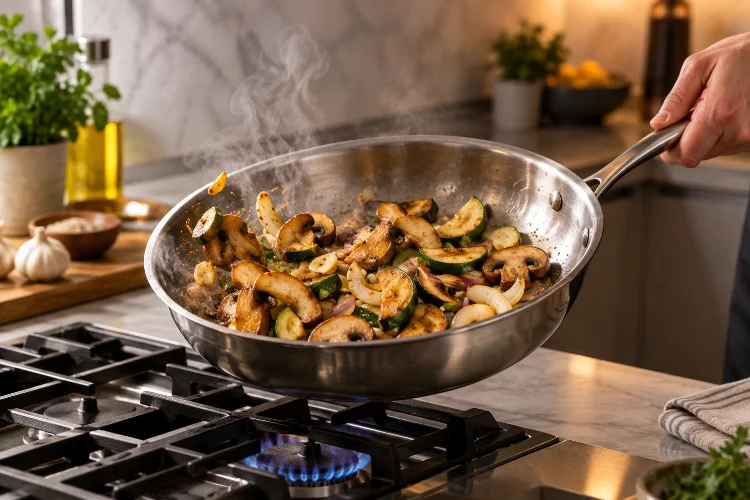
Sautéing cooks relatively small pieces of food quickly in a shallow pan with a modest amount of fat. It works well for onions, mushrooms, sliced vegetables, chicken pieces, and thin cuts of meat.
Preheat the pan before adding the food, then use medium to medium-high heat. The ingredients should make a gentle sizzling sound rather than sitting silently in cool oil.
Avoid filling the pan too tightly. Overcrowding traps moisture, causing food to steam instead of developing color. Cook in batches when necessary.
Searing
Searing uses higher heat to create a deeply browned exterior on meat, seafood, mushrooms, or other ingredients. Drying the food before placing it in the pan can help the surface brown more effectively.
Once the ingredient touches the hot pan, leave it alone long enough for a crust to form. Constantly moving it can interrupt browning. The CIA describes sautéing as rapid cooking in a small amount of fat over high heat.
3. Roasting, Baking, Grilling, and Broiling
Roasting and Baking
Roasting and baking both cook food with dry heat inside an oven. In everyday language, “roasting” usually refers to meat and vegetables, while “baking” is more commonly associated with bread, cakes, casseroles, and pastries.
Spread vegetables in a single layer when roasting them. Leaving space between the pieces allows hot air to circulate and encourages browning instead of steaming.
Baking usually requires greater precision because doughs and batters depend on carefully balanced ingredients and temperatures.
Preheating gives many baked foods the correct heat from the beginning, although specific recipes may use different approaches. King Arthur Baking provides dedicated guidance on the core techniques behind bread, cake, and cookie baking.
Grilling and Broiling
Grilling cooks food with strong direct heat, typically from underneath. It is ideal for burgers, skewers, fish, vegetables, and relatively tender cuts of meat.
Broiling uses intense heat from above, usually inside an oven. It can brown cheese, blister peppers, caramelize toppings, or quickly finish thin ingredients.
Both methods work fast, so stay nearby. A perfectly browned surface can burn within a short time.
4. Boiling, Simmering, and Poaching
Boiling
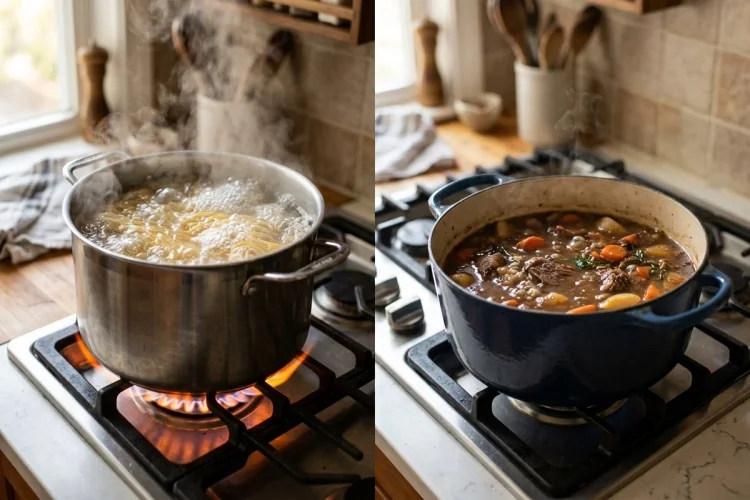
Boiling occurs when large bubbles move vigorously throughout a liquid. It is useful for pasta, potatoes, some vegetables, and foods that need strong, consistent heat.
Not every ingredient benefits from aggressive bubbling. Delicate food may break apart, while soups and sauces can reduce too quickly.
Simmering
A simmer is calmer than a boil. You should see small, steady bubbles rather than violent movement across the whole pot.
Simmering works well for soups, curries, sauces, beans, and stews. It allows flavors to develop while reducing the risk of scorching or damaging delicate ingredients.
Poaching
Poaching uses even gentler heat, with little or no visible bubbling. Eggs, fish, chicken, and fruit can all be poached.
The lower temperature helps delicate food retain moisture and shape. Escoffier categorizes boiling, simmering, poaching, and steaming as distinct moist-heat techniques suited to different ingredients and results.
5. Steaming for Gentle, Moist Cooking
Steaming cooks food with hot vapor generated by simmering or boiling liquid. The ingredients sit above the water rather than being submerged in it.
This technique is useful for vegetables, fish, dumplings, buns, and certain puddings. Because the food is not surrounded by water, its texture and flavor can remain more concentrated.
Use a steamer basket, bamboo steamer, or heatproof colander placed safely above a pot. Make sure the water does not touch the food, and keep enough liquid in the pan to prevent it from boiling dry.
Leave the lid closed as much as possible. Every time you open it, steam and heat escape, extending the cooking time. Escoffier describes steaming as one of the gentlest moist-heat cooking methods.
6. Pan-Frying and Deep-Frying
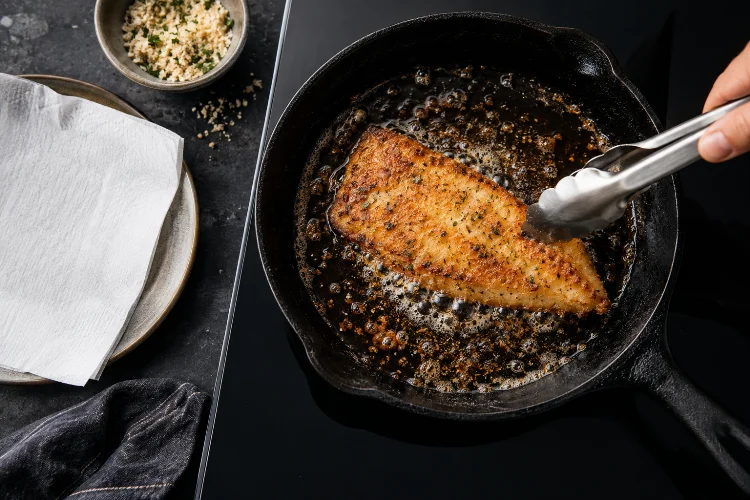
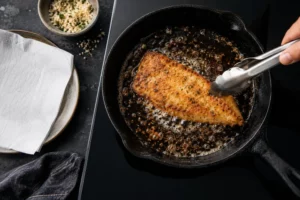
Pan-frying cooks food in a noticeable layer of hot oil, although the ingredient is not completely submerged. It works well for fish fillets, breaded chicken, fritters, and vegetable patties.
Turn the food once the first side becomes crisp and golden. Adding too many pieces at once can reduce the oil temperature and produce greasy results.
Deep-frying fully submerges food in hot oil. This can create a crisp exterior while cooking the inside quickly, as seen with French fries, doughnuts, and fried chicken.
Temperature control is essential. Oil that is too cool may soak into the food, while overheated oil can smoke, burn, or become dangerous. Never leave hot fat unattended, and lower food into it carefully to reduce splashing.
Drain fried food on a rack or absorbent paper, then season it while it is still hot. Frying is one of the foundational dry-heat techniques included in professional culinary training.
7. Braising and Stewing for Tender Results
Braising is a combination method that usually begins with searing. After the food develops color, a smaller amount of liquid is added, and everything cooks slowly in a covered pot.
This technique is ideal for tougher cuts of meat because extended cooking can make them more tender. Cabbage, leeks, beans, and other vegetables can also be braised.
Stewing follows a similar principle, but ingredients are normally cut into smaller pieces and covered more fully with liquid. Beef stew, chicken stew, and vegetable curry are familiar examples.
Keep the temperature low enough for a gentle simmer. Rapid boiling may toughen meat, break vegetables apart, and reduce the liquid too quickly.
The cooking liquid becomes part of the finished dish, collecting flavor from the browned ingredients, seasonings, and aromatics. The CIA recommends combination methods for foods that benefit from both initial browning and longer cooking with moisture.
Whatever method you use, check meat and poultry with a food thermometer rather than relying only on color. USDA guidance recommends measuring the thickest part to confirm that food has reached its safe minimum internal temperature.
Understanding the most important cooking methods gives you greater control over flavor, texture, and timing.
Dry-heat techniques such as sautéing, roasting, grilling, and frying are excellent for browning, while moist-heat methods such as steaming, simmering, and poaching provide gentler cooking.
Combination methods like braising bring both approaches together, creating deeply flavored and tender dishes. The key is matching the technique to the ingredient and result you want.
Choose one method from this guide and practice it with a simple recipe this week. Roast a tray of vegetables, poach an egg, sauté mushrooms, or braise chicken.
As these techniques become familiar, you will cook with more confidence and rely less on rigid instructions.