Meal prep can look intimidating when social media makes it seem like you need 20 matching containers, an enormous refrigerator, and an entire Sunday afternoon devoted to chopping vegetables.
In reality, getting started can be much simpler.
Meal Prep for Beginners: A Step-by-Step Guide is about learning how to prepare parts of your meals ahead of time so weekday eating becomes easier.
You might cook three lunches at once, prepare ingredients for several dinners, or simply wash vegetables and cook a batch of rice before the week begins.
Harvard’s Nutrition Source notes that there is no single correct way to meal prep. The best approach depends on your schedule, cooking ability, food preferences, and personal goals.
For beginners, the key is starting small rather than attempting to prepare every breakfast, lunch, dinner, and snack for an entire week.
With a basic plan, a grocery list, and a few reliable recipes, meal preparation can save time, reduce last-minute decisions, and make home cooking feel much more manageable.
1. Decide What You Actually Want to Prep
Before buying ingredients, decide what problem you want meal prep to solve.
Maybe mornings feel rushed, so breakfast is your priority. Perhaps you regularly buy lunch near work because there is nothing ready at home. Or dinner may be the stressful part of your day.
Harvard recommends that beginners start small, such as preparing enough dinners for two or three days rather than attempting a complete week immediately.
That is a great starting point.
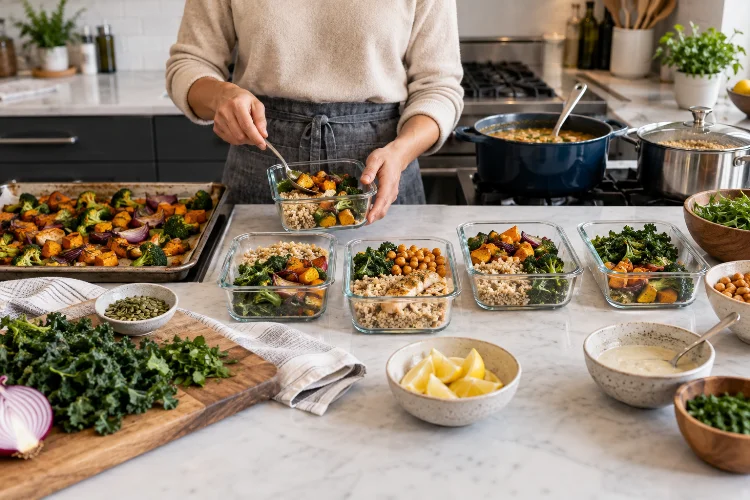
For example, you could prepare three lunches consisting of rice, roasted vegetables, and chicken. Another option is making overnight oats for several mornings while leaving lunch and dinner flexible.
You do not need to prep everything.
A realistic plan that you repeat every week is far more useful than an ambitious one you abandon after Sunday.
2. Choose Simple Meals With Shared Ingredients
Your first meal-prep menu should not contain five complicated recipes with completely different ingredients.
Choose meals that share basic components.
For example, chicken, rice, peppers, onions, spinach, and beans can become burrito bowls, wraps, salads, stir-fries, or simple rice plates.
Using the same ingredients in different combinations keeps shopping simpler and can reduce unused food.
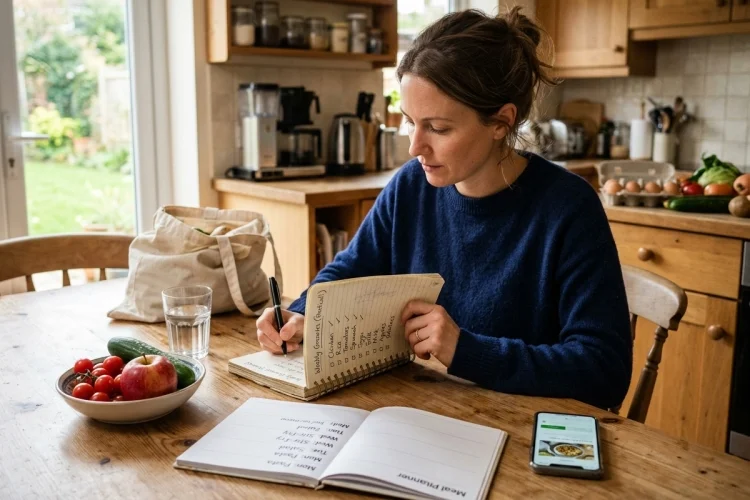
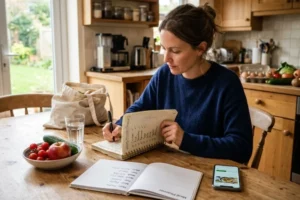
USDA MyPlate recommends checking what you already have in your refrigerator, freezer, and cabinets before deciding what to cook. It also suggests writing down your meals and considering how much cooking time you actually have during the week.
Before shopping, take five minutes to inspect your kitchen.
That half bag of pasta or container of frozen vegetables may already give you the starting point for one or two meals.
3. Make a Grocery List Before Shopping
Once you know what you are preparing, turn your plan into a grocery list.
Organize the list around basic food categories such as protein, grains, vegetables, fruits, dairy or alternatives, and cooking essentials.
This reduces the chance of wandering through the supermarket and buying random items that do not fit your plan.
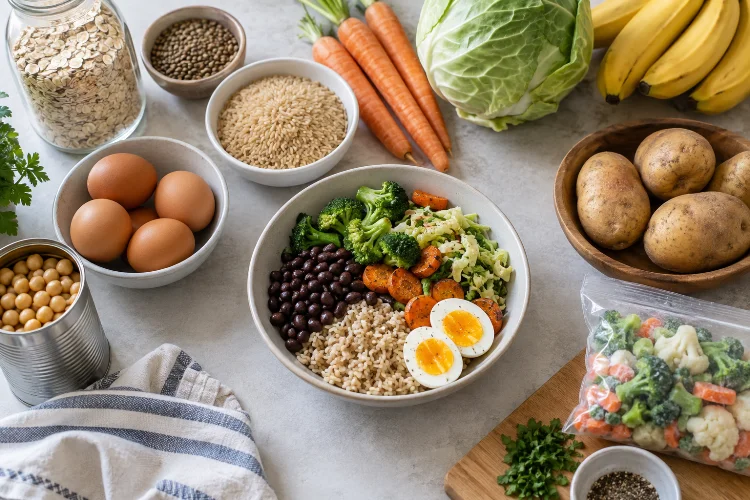
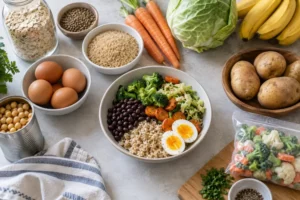
A simple beginner shopping list might include chicken thighs, eggs, brown rice, oats, carrots, broccoli, spinach, bananas, yogurt, canned beans, olive oil, and a few seasonings.
You do not need expensive ingredients marketed specifically for “meal prep.”
CDC guidance encourages choosing a variety of protein foods, fruits and vegetables, fiber-rich whole grains, and healthy fats when planning meals at home.
Frozen and canned produce can also be useful options, particularly when choosing varieties without added sugar or excessive sodium.
The goal is balance and practicality, not perfection.
4. Pick a Regular Meal Prep Day
Consistency makes meal preparation easier.
Choose a day when you usually have enough time to cook without rushing. For many people that might be Sunday, but Saturday evening, Monday morning, or any other quiet period can work just as well.
You can also seperate planning, shopping, and cooking across different days.
Harvard suggests choosing specific times for menu planning, grocery shopping, and food preparation. These tasks can happen on the same day or be divided throughout the week.
That flexibility matters.
Maybe you create your grocery list on Friday, shop Saturday morning, and cook Sunday afternoon.
Having a routine removes one more decision from your week. After a few sessions, you will also learn how much food you realistically need and how long your usual recipes take.
5. Cook Foods in the Right Order
Efficient meal prep is largely about timing.
Start with ingredients that require the longest cooking time. Whole grains, roasted vegetables, dried legumes, and larger portions of protein often take longer than sauces, salads, or chopped fruit.
Harvard specifically recommends beginning with longer-cooking foods and multitasking while they are in the oven or on the stove.
Suppose you are preparing rice, roasted vegetables, chicken, and a yogurt sauce.
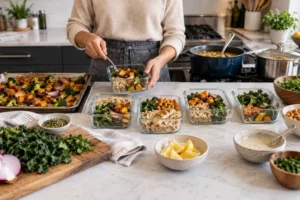
Start the rice first and preheat the oven. While the rice cooks, chop the vegetables and prepare the chicken. Once those go into the oven, make your sauce and wash fruit.
This approach prevents long periods of standing around waiting.
For a begginer, one pot on the stove and one tray in the oven may be enough. You can increase the complexity later when you feel more confident.
6. Build Meals From Flexible Components
Preparing several identical containers is easy, but eating the same thing repeatedly can get boring quickly.
A more flexible approach is component meal prep.
Cook a grain, one or two proteins, vegetables, and perhaps a sauce. Store them seperately or combine only some portions ahead of time.
For example, cooked chicken can become a rice bowl on Monday, a wrap on Tuesday, and a salad on Wednesday.
Roasted vegetables can accompany dinner, go into an omelet, or be mixed into pasta.
This approach gives you some structure without making every meal identical.
You can also change the flavor with inexpensive ingredients such as salsa, lemon juice, herbs, yogurt dressing, mustard, chili sauce, or different spice blends.
Meal prep should reduce work while still leaving enough variety to make the food enjoyable.
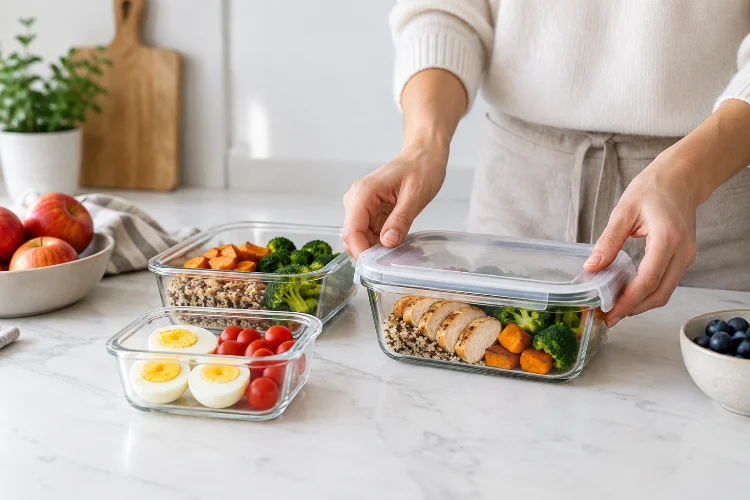
7. Portion Meals Into Practical Containers
After cooking, portioning food can make weekday meals much more convienient.
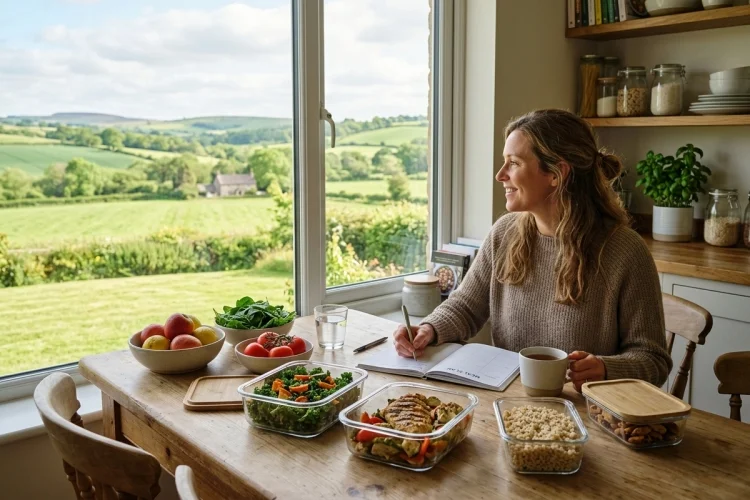
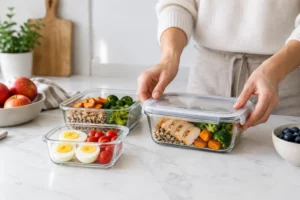
You do not necessarily need special meal-prep containers. Any clean, food-safe containers with secure lids can work.
Individual containers are useful for grab-and-go lunches. Larger containers can work better for ingredients you plan to combine later.
Think about realistic serving sizes instead of simply filling every container to the top.
CDC guidance notes that portion size still matters even when meals are prepared with nutritious foods.
Labeling containers can also help.
Write down the preparation date, especially when freezing several portions. Harvard recommends dating prepared foods and keeping older items toward the front so they are used first.
A simple piece of tape and a marker is enough.
8. Store Prepared Food Safely
Meal prep only works when the food remains safe to eat.
USDA advises refrigerating perishable foods promptly and placing large amounts of cooked food into shallow containers so they cool more quickly. Food generally should not sit at room temperature for more than two hours, or one hour when temperatures are above 90°F (32°C).
Most cooked leftovers can be refrigerated for about three to four days. If you prepare food that will not be eaten within that period, freezing it is usually a better option.
For example, imagine you prepare six chicken-and-rice portions on Sunday.
Keep meals for Monday through Wednesday in the refridgerator. Freeze later portions and thaw them safely when needed.
USDA also recommends reheating leftovers to 165°F (74°C).
Food safety should be part of the meal-prep routine from the beginning, not an afterthought.
9. Try an Easy Beginner Meal Prep Example
Your first session does not need ten recipes.
Try something like this:
Cook a pot of brown rice while roasting chicken and a tray of carrots, broccoli, and peppers. At the same time, boil several eggs and prepare a quick yogurt-and-lemon dressing.
When everything is ready, build three rice bowls using rice, vegetables, and chicken.
Save the remaining chicken for wraps. Keep some vegetables separate for an omelet or quick dinner. Use the eggs for breakfast or snacks.
In roughly one organized cooking session, you have created ingredients for several different meals.
The next week, change just one or two components.
Swap rice for potatoes, chicken for lentils or tofu, and broccoli for another vegetable. Small changes keep the system interesting without forcing you to learn an entirely new meal-prep routine every week.
10. Improve Your System Gradually
Your first meal-prep session probably will not be perfect.
Maybe you make too much rice. Perhaps you discover that prepared salad does not stay as fresh as you expected. You may also realize that five identical lunches become boring by Thursday.
That information is useful.
Adjust the next session based on what actually happened.
If three prepared lunches were enough, make three again instead of five. If you loved having chopped vegetables ready but disliked fully assembled dinners, focus on ingredient prep next time.
Over several weeks, you will develop a personal system based on your schedule, appetite, storage space, and cooking style.
That is when meal prep becomes genuinely sustainable.
Meal Prep for Beginners: A Step-by-Step Guide does not have to mean preparing an entire week’s food in one exhausting afternoon.
Start by identifying the meals that cause the most stress, choose a few simple recipes with shared ingredients, and prepare only two or three days of food.
As you become more comfortable, experiment with batch cooking, flexible meal components, freezing extra portions, and preparing ingredients rather than complete dishes.
Remember that safe cooling, refrigeration, and reheating are just as important as the cooking itself. For your first attempt, keep things simple. Choose three meals, write a short grocery list, and schedule one preparation session this week.
Once you experience how much easier a busy day feels when food is already waiting, building a regular meal-prep routine becomes much easier.