Cooking from scratch every single day sounds great in theory. In reality, after work, errands, commuting, studying, or taking care of a family, spending another hour in the kitchen may be the last thing you want to do.
That is where batch cooking becomes useful.
Learning how to cook several meals in one preparation session allows you to handle much of the chopping, roasting, boiling, and portioning at once.
Instead of preparing seven completely different dinners from beginning to end, you create flexible ingredients that can become several meals throughout the week.
Harvard’s Nutrition Source notes that meal preparation can save time and money, reduce last-minute food decisions, and help people create more balanced meals.
The secret is not simply cooking huge quantities of one dish. A better system combines planning, multitasking, shared ingredients, and safe storage.
With the right approach, one organized kitchen session can make the next several days noticeably easier.
1. Plan Meals Before You Start Cooking
Good batch cooking begins before you turn on the stove.
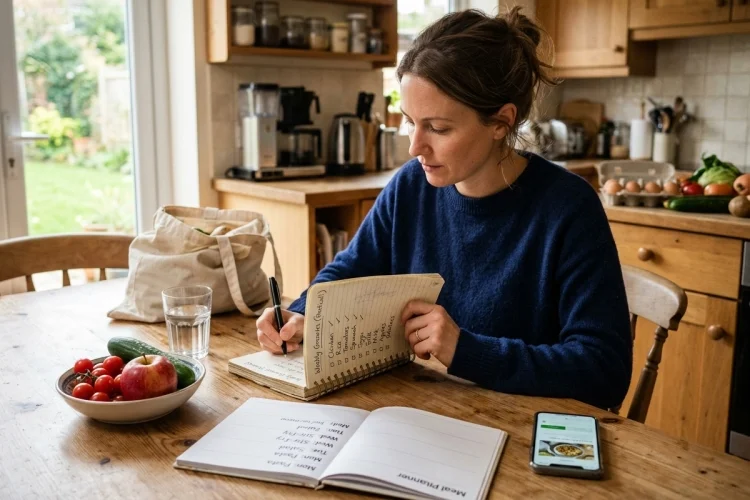
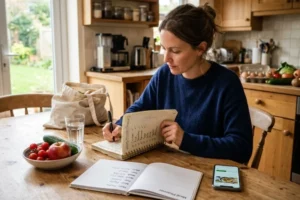
Start by deciding roughly what you want to eat over the next three to five days. You do not need a strict calendar, but having several meal ideas prevents you from preparing random ingredients that do not work well together.
USDA MyPlate recommends checking your refrigerator, freezer, and pantry before planning. It also suggests writing down meals, considering how much cooking time you have, and intentionally planning for leftovers.
For example, imagine you plan to make chicken rice bowls, vegetable pasta, lentil soup, and chicken wraps.
Those dishes can share several ingredients: onions, bell peppers, carrots, spinach, chicken, and herbs. Buying and preparing overlapping foods makes your session much more efficient.
Try to avoid selecting five recipes that all require completely seperate ingredient lists. Shared components are where much of the time-saving happens.
2. Cook Components Instead of Five Complete Recipes
One of the easiest ways to make batch cooking less repetitive is to prepare components rather than fully assembled meals.
Think of your refrigerator as a collection of building blocks.
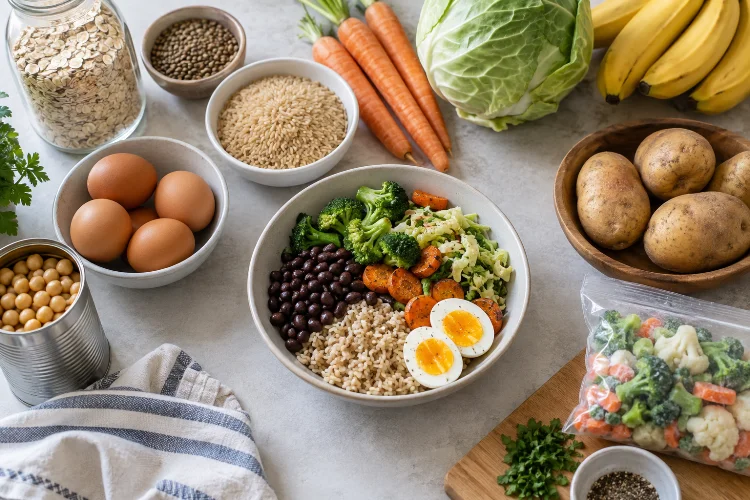
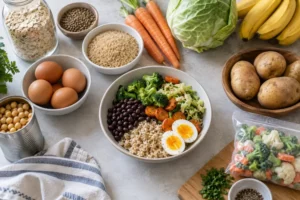
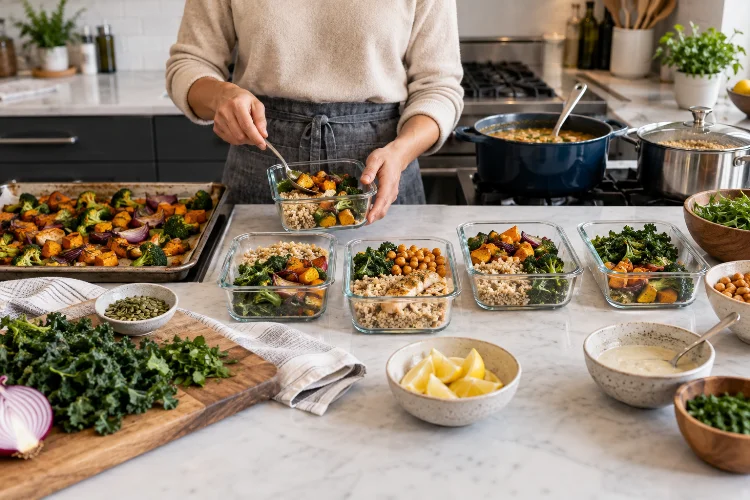
You might prepare a large batch of brown rice, roasted vegetables, cooked chicken, lentils, washed salad greens, and a basic sauce. These ingredients can then be combined differently throughout the week.
Monday’s chicken can become a rice bowl with roasted vegetables. On Tuesday, slice it into a wrap with lettuce and yogurt sauce. On Wednesday, add some to pasta with tomatoes and spinach.
This style of meal preparation gives you more flexibility than eating five identical containers of chicken and rice.
It can also support better meal balance. Harvard’s Healthy Eating Plate suggests emphasizing vegetables and fruits, whole grains, and healthy protein sources when putting together meals.
Batch-preparing each of those categories makes balanced meals easier to assemble quickly.
3. Start With Foods That Take the Longest
The order in which you cook matters.
If brown rice needs 40 minutes, roasted vegetables need 30 minutes, and a sauce takes only 10 minutes, starting with the sauce wastes valuable time.
Begin with ingredients that require the longest unattended cooking.
Harvard’s meal-prep guidance similarly recommends starting with longer-cooking foods such as proteins, whole grains, dried legumes, and roasted vegetables. While those foods cook, you can work on faster tasks.
For example, your session might begin by preheating the oven and starting a pot of grains.
While both are cooking, chop vegetables. Once vegetables go into the oven, prepare chicken or tofu. While the protein cooks, mix sauces, wash fruit, or portion snacks.
This overlapping workflow can turn two hours of sequential cooking into a much shorter and more productive session.
The goal is to minimize standing around waiting for one thing to finish.
4. Prepare Ingredients in an Efficient Order
Before cooking, group similar preparation tasks together.
Instead of cutting one onion, washing the knife, cooking it, then repeating the process for another recipe, chop all the onions you need at once.
Do the same with carrots, peppers, herbs, and other produce.
This method reduces repeated setup and cleanup. It also helps keep your workspace organized.
A simple order might look like this: wash produce, chop vegetables, measure seasonings, prepare raw proteins, then begin cooking.
Handle ready-to-eat foods before raw meat when possible, and clean cutting boards, knives, and surfaces carefully after contact with raw animal products.
The FDA emphasizes safe handling during shopping, storage, and meal preperation as an important part of preventing foodborne illness.
Keeping your workflow organized is not just faster. It can also reduce cross-contamination.
5. Use the Oven and Stove at the Same Time
Your kitchen equipment can work in parallel.
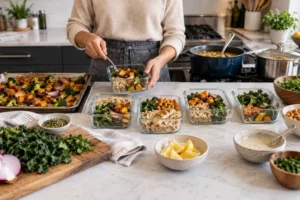
While vegetables roast in the oven, rice can simmer on one burner and soup can cook on another. Meanwhile, you can assemble cold ingredients at the counter.
This is one of the biggest advantages of a batch-cooking session.
Suppose you are making four days of food. You might roast two trays at once-one with vegetables and another with chicken-while cooking quinoa on the stove.
During those 25 to 35 minutes, prepare a salad base, hard-boil eggs, mix a dressing, or portion fruit.
You do not need every burner running at full speed. Two or three processes happening simultaneously are often enough.
Just avoid taking on so many tasks that you lose track of cooking times. A timer for each major item can be surprisingly helpful.
The best workflow feels busy but controlled, not chaotic.
6. Make One Ingredient Taste Different Across Meals
Meal prep becomes boring when every container tastes exactly the same.
Seasoning can solve that problem.
Instead of heavily seasoning an entire batch of chicken in one flavor, keep the base relatively simple. Then add different sauces, herbs, spices, and toppings when assembling meals.
For example, plain roasted chicken can become Mediterranean-inspired with lemon, herbs, cucumber, and yogurt. Another portion can go into tacos with cumin, salsa, and beans.
A third portion might become an Asian-style rice bowl with soy sauce, ginger, vegetables, and sesame.
The same idea works with grains and vegetables.
A container of roasted vegetables can accompany pasta one day, become a grain bowl the next, and go into an omelet later in the week.
Keeping several sauces or condiments available makes batch-cooked ingredients far more versatile and convienient.
7. Portion Food According to When You Will Eat It
After cooking comes one of the most important steps: deciding what should go into the refrigerator and what should be frozen.
Do not automatically refrigerate an entire week’s worth of cooked food.
USDA food-safety guidance says most cooked leftovers should generally be used within three to four days when refrigerated. Food that will not be eaten within that period can be frozen instead.
For example, if you prepare six portions on Sunday but will not eat portions five and six until Friday or Saturday, freezing those later meals may be the safer choice.
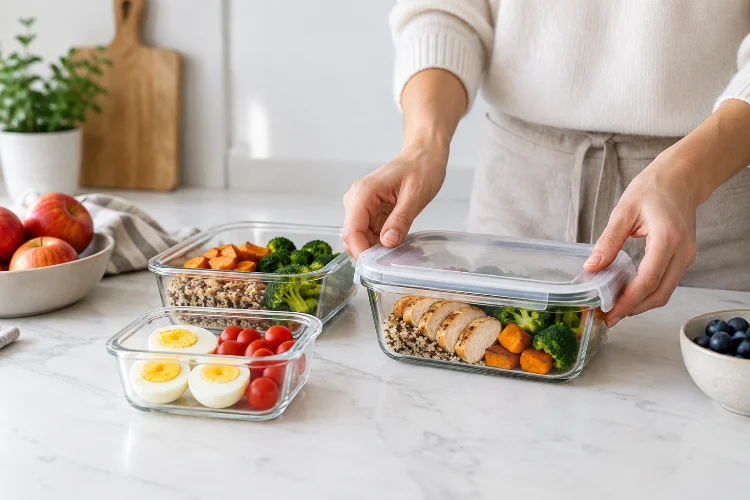
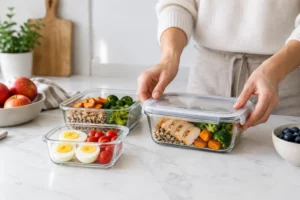
Label containers with the food name and preparation date.
Transparent containers can also help because you can quickly see what is available instead of discovering forgotten food at the back of the refridgerator several days later.
Harvard also recommends dating prepared foods and keeping older items toward the front so they are used first.
8. Cool and Store Cooked Food Safely
Food safety becomes particularly important when preparing large batches.
Do not leave cooked meals sitting on the counter for several hours while you finish everything else.
FoodSafety.gov recommends refrigerating perishable cooked food within two hours, or within one hour when temperatures are above 90°F (32°C). Large quantities should be divided into smaller, shallow containers so they cool more quickly.
Your refrigerator should generally stay at 40°F (about 4°C) or below.
When reheating leftovers, USDA recommends bringing them to 165°F (74°C).
These guidelines matter even when food still looks and smells normal. Harmful bacteria cannot always be detected by appearance or odor.
Safe cooling and storage should therefore be treated as part of meal prep-not something you think about afterward.
9. Try a Simple Two-Hour Batch-Cooking Example
Your preparation session does not need to be elaborate.
Imagine you want enough flexible food for several lunches and dinners.
Start brown rice and preheat the oven. Next, chop broccoli, carrots, onions, zucchini, and peppers. Put most of the vegetables on a roasting tray and reserve some onions and carrots for soup.
While the vegetables roast, cook chicken breasts or tofu and start a simple lentil soup.
During the remaining cooking time, wash salad greens, boil eggs, mix a basic yogurt dressing, and slice fruit.
At the end, you might have rice, roasted vegetables, protein, soup, salad ingredients, eggs, fruit, and sauce ready to use.
Those components can create rice bowls, wraps, salads, soup-and-toast lunches, vegetable omelets, or quick stir-fries.
You have not technically cooked one giant recipe.
You have created a small system of ingredients that dramatically reduces the amount of cooking required later.
Learning how to cook several meals in one preparation session is mainly about working smarter rather than cooking faster.
Plan dishes with overlapping ingredients, prepare versatile components, start with foods that take the longest, and let your oven and stove work simultaneously.
The other half of successful batch cooking is storage. Portion meals based on when you expect to eat them, refrigerate cooked food promptly, and freeze portions that will not be used within a few days.
You do not need to prepare an entire week on your first attempt. Start with three lunches or three dinners and build from there.
Choose one free afternoon this week, pick a few flexible ingredients, and try your first batch-cooking session. Even a little preparation can make busy weekdays feel considerably easier.