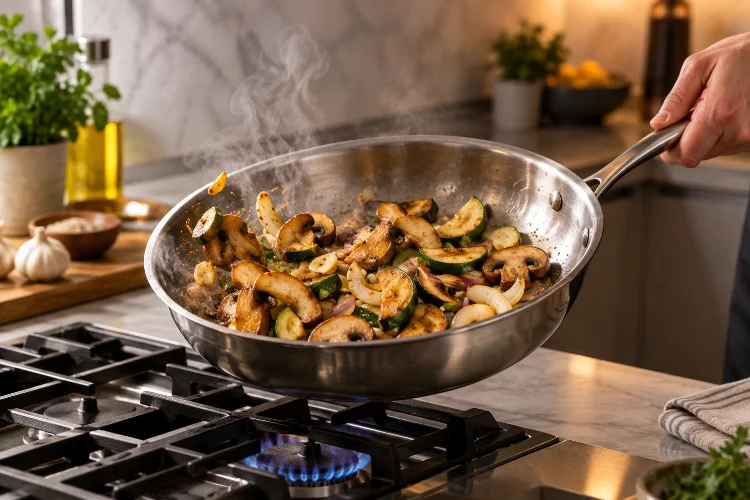
Sautéing sounds simple: heat a pan, add some oil, throw in your ingredients, and start stirring.
Yet anyone who has ended up with watery mushrooms, pale chicken, burnt garlic, or vegetables that are soft on the outside but raw inside knows there is a little more to it.
Learning how to sauté food properly is really about controlling heat, moisture, space, and timing. Unlike boiling or steaming, sautéing cooks food quickly in a relatively small amount of fat while allowing direct contact with a hot pan.
The Culinary Institute of America describes sautéing as rapidly cooking food in a small amount of fat over high heat.
Once you understand a few basic principles, the technique becomes surprisingly flexible. You can use it for vegetables, chicken, shrimp, mushrooms, tofu, aromatics, and countless weeknight dishes.
The best part? You do not need expensive equipment or restaurant-level skills. Good preperation and a little patience can make a huge difference.
1. Understand What Sautéing Actually Means
Sautéing is a quick cooking method where relatively small or tender pieces of food are cooked in a hot pan with a thin layer of fat.
The technique is different from deep-frying because the ingredients are not submerged in oil. It also differs from slow pan-cooking because sautéing generally depends on relatively high heat and fast cooking.
One major goal is browning.
When proteins and certain sugars on the surface of food react under heat, they create new flavors and aromas through what is commonly called the Maillard reaction.
This reaction contributes to the rich flavor and brown color associated with seared meat, toasted bread, and many sautéed foods.
That is why properly sautéed mushrooms taste very different from mushrooms that have simply steamed in their own liquid.
2. Choose the Right Pan for Sautéing
Your pan affects how evenly food cooks and how successfully it browns.
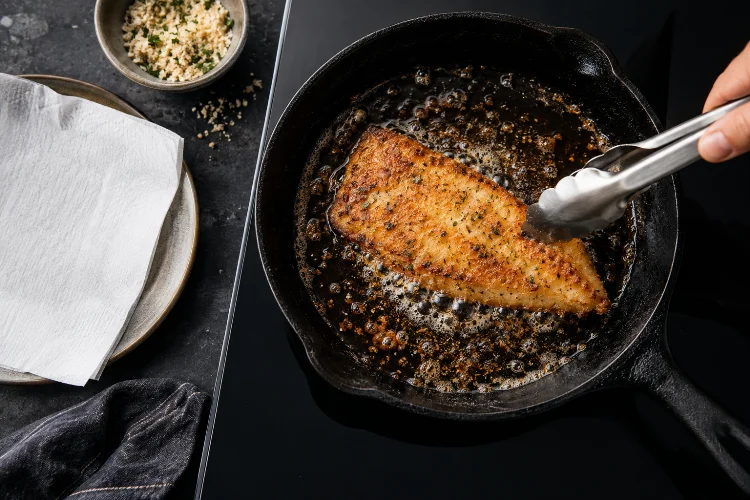
A stainless-steel skillet or sauté pan is an excellent general-purpose option because it handles high heat well and encourages browning. Cast iron is another useful choice, especially when cooking meat, because it retains heat effectively.
Nonstick cookware can work for delicate ingredients such as fish or eggs, although it is usually less ideal when your main goal is developing a strong brown crust.
Size matters just as much as material.
For example, if you place 500 grams of mushrooms into a tiny skillet, their released moisture has nowhere to escape quickly. Instead of browning, they begin steaming.
Whenever possible, choose a pan large enough to keep most ingredients in direct contact with its surface without piling them on top of each other.
3. Prepare Your Ingredients Before Heating the Pan
Sautéing happens quickly, so this is not the best technique for chopping vegetables while something is already cooking.
Have your ingredients washed, cut, seasoned, and ready before turning on the stove.
Try to cut foods into reasonably uniform pieces. A mixture of tiny carrot cubes and large chunks will cook unevenly-the small pieces may burn before the larger ones become tender.
Surface moisture is another important factor.
Pat meat, tofu, seafood, and wet vegetables dry when possible. Excess water absorbs heat and creates steam, making browning more difficult. MasterClass similarly recommends keeping ingredients as dry as possible when preparing food for sautéing.
This small step is especially helpful when sautéing chicken, mushrooms, zucchini, or shrimp.
4. Heat the Pan Before Adding Food
One of the most common sautéing mistakes is adding ingredients to a cold pan.
Start by placing the empty pan over medium or medium-high heat. Allow it to warm before adding your cooking fat.
The exact temprature depends on the ingredient and cookware, so avoid relying only on the stove’s dial. Watch what happens inside the pan.
Once the oil becomes loose and begins shimmering across the surface, the pan is generally approaching a useful cooking temperature. You want the food to produce a noticeable sizzle when it enters the pan.
However, hotter is not always better.
If the oil begins producing heavy smoke or your garlic turns dark within seconds, reduce the heat. Good sautéing requires enough energy to brown the food without burning the oil or ingredients.
5. Use Enough Oil, but Do Not Drown the Food
Sautéing uses a small amount of cooking fat, but “small” does not mean almost none.
Add enough oil to create a thin coating across the cooking surface. Oil helps transfer heat between the pan and food, promotes more even browning, and reduces sticking.
If the pan looks completely dry halfway through cooking, adding a little more oil is usually better than allowing ingredients to scorch. Serious Eats notes that sufficient oil helps maintain even cooking and browning, particularly when ingredients begin absorbing fat from the pan.
Ingredients such as eggplant and mushrooms may absorb oil rapidly at first, so they may require a little extra attention.
For higher-heat cooking, neutral oils such as canola, avocado, sunflower, or refined vegetable oil are convenient choices. Butter adds excellent flavor but can brown or burn more quickly because of its milk solids.
One useful approach is cooking primarily with oil and adding a small amount of butter near the end for flavor.
6. Avoid Overcrowding the Pan
Overcrowding may be the biggest enemy of good sautéing.
Every ingredient contains some moisture. As food heats up, part of that moisture evaporates.
If too much food is packed into one pan, the released steam becomes trapped around the ingredients. The surface temperature drops, moisture builds up, and the food starts steaming instead of developing the golden exterior you want.
MasterClass specifically advises against overcrowding because trapped steam can prevent proper browning.
Imagine sautéing 700 grams of sliced chicken for fajitas. Putting everything into a medium skillet at once may seem faster, but cooking it in two batches will often produce better color and texture—and may not take much longer.
Give each piece some breathing room.
Cooking batches seperately can feel inconvenient, but the improvement in flavor is usually worth the extra few minutes.
7. Do Not Stir Everything Constantly
The word sauté comes from a French term associated with jumping, so people sometimes assume ingredients should constantly fly around the pan.
They do not.
Food needs uninterrupted contact with the hot surface to brown properly. If you stir chicken every five seconds, you continually move it away from the hottest contact points.
After adding your ingredients, spread them across the pan and give them time to cook.
For diced vegetables, stirring occassionally is usually enough. For chicken breast pieces, steak strips, tofu cubes, or scallops, allow one surface to brown before turning them.
Garlic and finely chopped aromatics are different because they burn more easily. These ingredients usually need more frequent movement and often work better when added after slower-cooking vegetables have already started cooking.
8. Match Cooking Time to the Ingredient
Not everything should enter a sauté pan at the same moment.
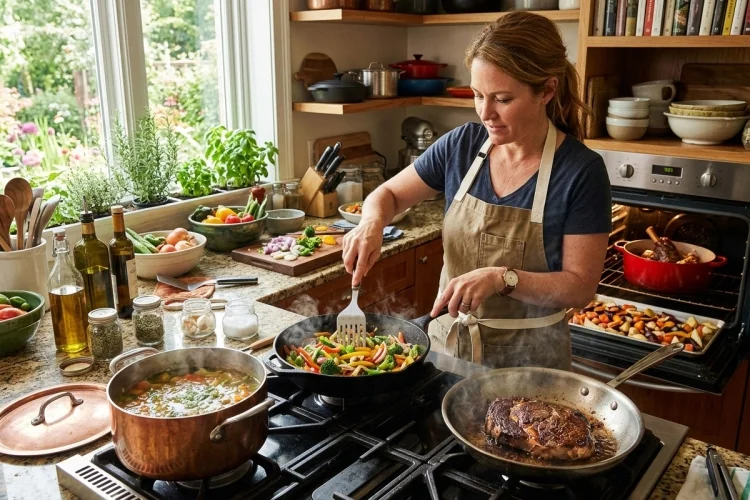
Dense vegetables such as carrots may need several minutes longer than spinach. Onions need time to soften, while minced garlic may need less than a minute before becoming fragrant.
Think about cooking order.
For a simple vegetable sauté, you might start with carrots and bell peppers, add zucchini later, then finish with spinach and garlic.
The same idea applies to proteins. Thin chicken strips cook much faster than thick breast pieces. Shrimp usually cook in only a few minutes and can become rubbery if left in the pan too long.
When sautéing meat or poultry, appearance alone should not determine whether the food is safe. USDA guidance recommends checking internal temperature with a food thermometer.
Poultry should reach 165°F (73.9°C), while whole cuts of beef, pork, veal, and lamb should reach at least 145°F (62.8°C) followed by a three-minute rest.
9. Turn the Brown Bits Into Extra Flavor
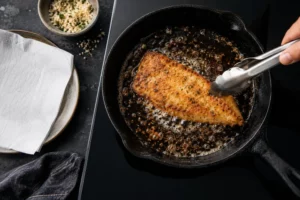
After sautéing meat, you may notice golden or dark brown bits stuck to the bottom of a stainless-steel pan.
Do not automatically scrub them away.
Those browned deposits can become the foundation of a simple pan sauce. After removing the cooked food, lower the heat slightly and add a small amount of stock, wine, broth, or another suitable liquid.
Scrape the pan gently with a wooden spoon as the liquid bubbles.
This process, called deglazing, dissolves many of the flavorful browned bits into the liquid. MasterClass describes deglazing as adding liquid to a hot pan to release those browned particles so they can become part of a sauce or gravy.
Add a little butter, herbs, pepper, or lemon juice afterward, and a basic sauté can suddenly taste much more polished.
10. Common Sautéing Mistakes to Avoid
Most sautéing problems come from a handful of habits.
Putting wet ingredients into the pan can lead to steaming. Using a pan that is too small reduces browning. Adding food before the pan is hot enough may cause sticking and pale surfaces, while excessive heat can burn butter, garlic, spices, or delicate foods.
Constant stirring is another common problem because it prevents ingredients from staying in contact with the pan long enough to develop color.
Finally, remember that sautéing is supposed to be relatively fast.
If a tough cut of meat needs an hour to become tender, sautéing alone probably is not the appropriate cooking method. Sautéing works best for tender cuts, smaller pieces, vegetables, seafood, aromatics, and foods that benefit from quick browning.
Learning how to sauté food properly comes down to a few dependable habits: prepare ingredients first, remove excess moisture, heat the pan correctly, use enough oil, avoid overcrowding, and give food enough contact time to develop color.
You do not need complicated techniques to make a noticeable improvement. Even something as simple as drying mushrooms before cooking or sautéing chicken in two batches instead of one can completely change the final texture.
Start practicing with forgiving ingredients such as onions, zucchini, mushrooms, chicken strips, or shrimp. Pay attention to the sound, aroma, heat, and color rather than relying only on cooking time.
The more often you practice, the easier it becomes to recognize exactly when your pan-and your food-is ready.
Ready to improve your everyday cooking? Pick one ingredient tonight, heat up a skillet, and put these sautéing techniques into practice.