
A grocery list should make your week easier, not become another complicated project. Yet many people either shop without a plan and forget important ingredients, or create an ambitious list filled with food they never have time to use.
The problem is usually that the list is based on an imaginary perfect week instead of your real schedule, appetite, budget, and energy level.
Learning how to create a practical weekly grocery list means connecting what you buy to meals you will genuinely prepare. It also means checking what is already at home, estimating realistic quantities, and leaving room for leftovers, takeout, or changing plans.
A useful list does not need to be long or beautifully formatted. It simply needs to help you buy the right food in sensible amounts while reducing forgotten ingredients, unnecessary spending, and food waste.
1. Start with Your Real Weekly Schedule
Before choosing meals, check your calendar. Count how many breakfasts, lunches, and dinners you will actually eat at home, then identify the evenings when cooking time will be limited.
If you have a late meeting on Wednesday, do not plan a recipe that requires an hour of preparation. Choose leftovers, a freezer meal, sandwiches, eggs, or another quick option.
The EPA recommends building a shopping list around the number of meals you expect to eat at home, including plans for eating out and using leftovers. This helps prevent overbuying before it begins.
Plan three or four main dinners rather than seven unrelated meals. The remaining nights can use leftovers, transformed ingredients, or a dependable backup dish.
2. Shop Your Kitchen Before the Store
Check the refrigerator, freezer, and pantry before writing anything down. Look for produce that needs attention, open packages, frozen proteins, grains, canned foods, and sauces.
This inventory gives your menu a starting point. Half a cabbage could become stir-fry or slaw, cooked rice might become fried rice, and canned beans can support tacos, soup, or a grain bowl.
The EPA encourages “shopping your refrigerator first” and using meal mapping to tailor a grocery list. Buying around food you already own reduces duplicate purchases and helps older ingredients get used.
Keep a small “use first” area in the refrigerator so perishable items remain visible.
3. Build the List Around Flexible Meals
Use a simple meal structure: a protein, a vegetable, a carbohydrate, and a sauce or seasoning. This gives you direction without requiring a different recipe every night.
For example, chicken, rice, peppers, and yogurt sauce can become a dinner bowl. The chicken can later go into wraps, while the peppers can be added to eggs or pasta.
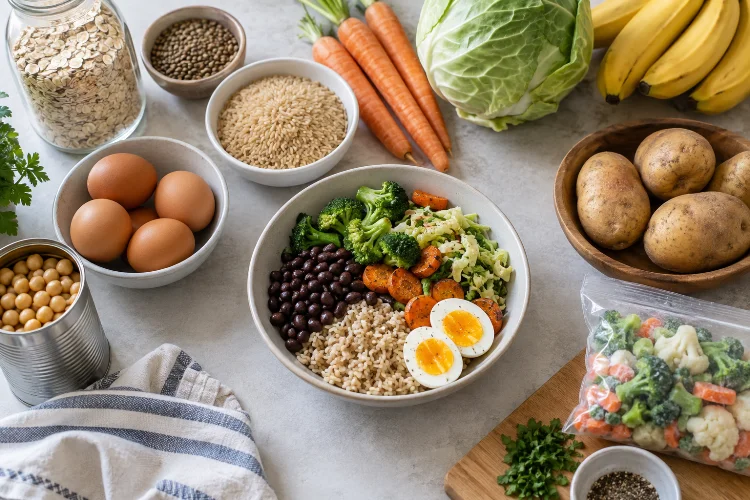
Choose ingredients that work in more than one meal. Eggs, onions, frozen vegetables, rice, pasta, canned tomatoes, beans, yogurt, and tortillas are useful because they can move between breakfasts, lunches, and dinners.
Harvard’s Healthy Eating Plate can provide a loose guide, with vegetables and fruits taking a large share and the remaining space generally divided between whole grains and healthy protein.
4. Write Quantities, Not Just Product Names
“Buy spinach” is less useful than “buy enough spinach for two lunches and one pasta.” Adding quantities connects every item with a clear purpose.
Think in meals and portions rather than package size alone. If two people will eat chicken twice, estimate the amount needed for four servings. If bananas are only for weekday breakfasts, buying five may be more sensible than grabbing a large bunch.
The EPA recommends noting quantities and the number of meals an item will support. It also warns that bulk discounts save money only when the food is used before it spoils.
Be especially cautious with highly perishable foods. It is easier to replace a missing tomato later than to use six extra tomatoes before they soften.
5. Organize the List by Store Section
Arrange the list in the same general order as the store: produce, bakery, meat or seafood, dairy, pantry, frozen foods, and household supplies.
This reduces backtracking and makes forgotten ingredients less likely. It also reveals whether the list is unbalanced, such as having several proteins but no vegetables or buying too many fresh foods without durable backups.
A phone note works well because it can be updated throughout the week, but paper is equally effective. Maintain a short master list of regularly purchased staples, then copy only what needs replacing.
6. Balance Fresh Food with Long-Lasting Staples
A list made entirely of fresh ingredients can create waste when plans change. Mix perishable produce and proteins with frozen, canned, and shelf-stable options.
Fresh berries may cover the first few breakfasts, while frozen fruit can handle the end of the week. Fresh fish might be cooked soon after shopping, while canned tuna, beans, eggs, or frozen chicken can provide later meals.
Harvard’s meal-prep guidance notes that batch-friendly foods and freezing can extend the usefulness of prepared ingredients. Soups, stews, cooked beans, meat, fruit, and vegetables can support future meals when stored appropriately.
Convenience ingredients are not cheating. Pre-cut vegetables, canned beans, salad kits, and frozen grains may be worthwhile when they make home cooking more realistic.
7. Shop with Budget and Food Safety in Mind
Set a rough spending limit before entering the store. Compare unit prices, but do not let a cheaper price per ounce persuade you to buy more than you can use.
Harvard recommends planning a few meals, considering meatless options, allowing flexibility for sales, and avoiding grocery shopping while very hungry.
Place refrigerated and frozen foods in the cart near the end of the trip. Keep raw meat separated from ready-to-eat items and take perishables home promptly.
FDA guidance says refrigerators should remain at 40°F, or 4°C, or below. Perishable groceries should generally be refrigerated within two hours, or within one hour when the temperature is above 90°F, or 32°C.
At home, move older food toward the front and place newer purchases behind it. This simple habit helps your list continue working after checkout.
Creating a practical weekly grocery list begins with your real schedule, not an idealized meal plan. Check what is already at home, choose a few flexible meals, and write the quantities each recipe or snack actually requires.
Organize the list by store section, combine fresh foods with longer-lasting staples, and leave space for leftovers and unexpected changes. A good list should guide your shopping without making the week feel rigid.
Before your next grocery trip, spend ten minutes checking your calendar, refrigerator, freezer, and pantry. Then write down only the food connected to a realistic meal or household need.
That small routine can save time, control spending, and help more groceries reach the plate instead of the trash.