Cooking meat can feel like a frustrating balancing act. Take it off the heat too early and you may worry that it is unsafe. Leave it cooking too long and a promising chicken breast, pork chop, or steak can become dry and chewy.
The solution is not to rely on color, cooking time, or guesswork. Learning how to cook meat safely without drying it out means selecting a suitable method, preparing the meat evenly, controlling the heat, and checking the center with a food thermometer.
Temperature matters because heat makes muscle proteins tighten and release moisture. Studies of beef and poultry have linked higher endpoint temperatures with greater cooking loss, although the cut and cooking method also influence the result.
This guide explains how to reach safe internal temperatures while keeping everyday meat flavorful, tender, and juicy.
1. Match the Cooking Method to the Cut
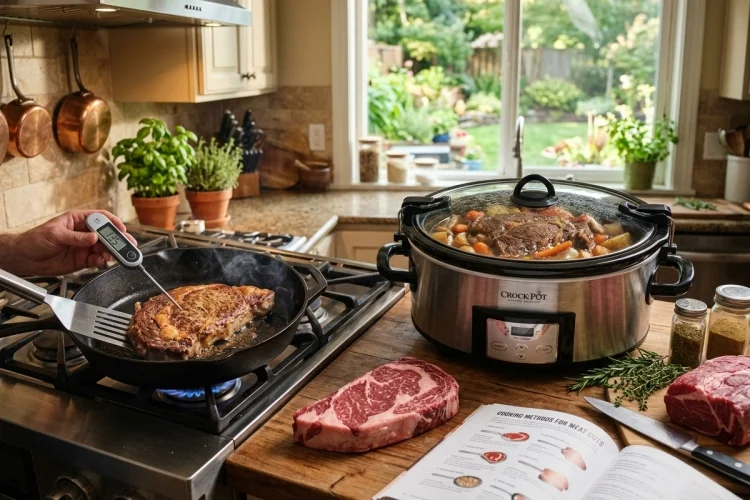
Tender cuts such as steaks, pork chops, chicken breasts, and lamb chops generally suit quicker methods like pan-searing, grilling, or roasting.
Tougher cuts, including beef chuck, brisket, pork shoulder, and lamb shanks, benefit from slow braising because time and moisture help soften their connective tissue.
The mistake is treating every cut the same. Lean meat can dry out during long, aggressive cooking, while a tough cut may remain chewy when cooked too quickly.
Make portions reasonably even as well. Pounding a thick chicken breast or dividing a large piece into similar portions helps the center and edges finish closer together.
2. Thaw and Prepare Meat Safely
Thaw meat in the refrigerator whenever possible, inside a container that can catch leaking juices. The FDA also recognizes cold-water and microwave thawing, but meat defrosted by either method should be cooked immediately. Never thaw it on the counter.
Pat the surface dry before cooking. Less surface moisture means better browning and less steaming.
Keep raw meat away from vegetables, sauces, bread, and cooked food. Wash hands, knives, boards, and plates after contact with raw juices, and never return cooked meat to an unwashed raw-meat plate.
3. Season Ahead, but Keep It Refrigerated
Salt can move below the surface and affect how meat proteins hold moisture. Research on salted meat systems shows that sodium chloride can influence water-holding capacity and cooking loss, although the result depends on concentration, timing, and the type of meat.
For a simple dry brine, season lightly and refrigerate the meat before cooking. Small portions need less time than a whole chicken or large roast.
Wet brines and marinades must also stay cold. USDA guidance recommends food-safe plastic, stainless steel, or glass containers and refrigerated storage during poultry brining or marinating.
Avoid leaving meat too long in a strongly acidic marinade. Large amounts of lemon juice or vinegar can make the surface soft rather than evenly tender.
4. Use a Food Thermometer, Not Color
Color and texture are unreliable safety tests. Poultry may remain pink after safe cooking, while ground meat can turn brown before it reaches a safe temperature.
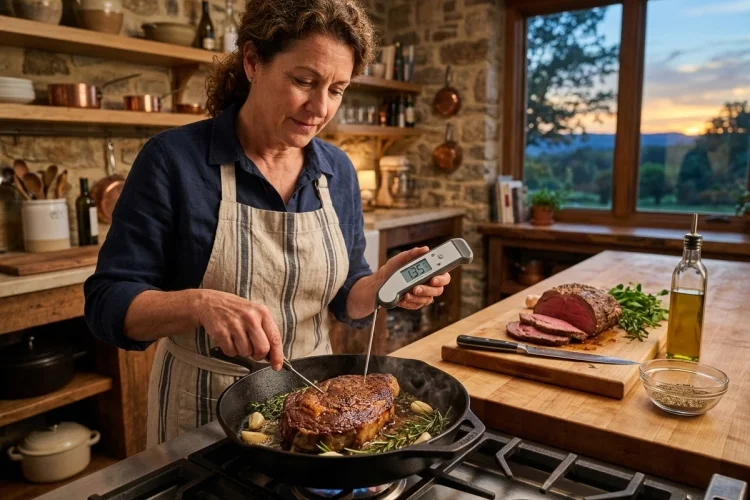
Insert an instant-read thermometer into the thickest part, away from bone, fat, or gristle. For burgers and thin chops, insert it through the side so the sensing area reaches the center.
The safe minimum temperatures are:
- Whole cuts of beef, pork, veal, and lamb: 145°F (63°C) plus a three-minute rest
- Ground beef, pork, veal, and lamb: 160°F (71°C)
- All poultry, including ground poultry: 165°F (74°C)
These temperatures come from USDA and FDA guidance.
5. Control the Heat Instead of Rushing
High heat is useful for browning, but it does not need to control the entire process. A thick steak, chop, or chicken breast can burn outside before its center becomes safe if the pan stays extremely hot.
Start hot enough to develop color, then lower the burner or finish thicker meat in a moderate oven. Thin cuts need quicker cooking, while thick pieces usually benefit from gentler heat.
Avoid pressing burgers or chicken with a spatula, since this pushes moisture and fat into the pan. Do not repeatedly cut into the meat to inspect it either; a thermometer is cleaner, quicker, and more accurate.
6. Stop Cooking at the Safe Temperature
Start checking several minutes before the recipe’s estimated finishing time. Cooking times vary with thickness, bone content, pan material, oven accuracy, burner strength, and the meat’s starting temperature.
Higher endpoint temperatures usually mean greater moisture loss. Beef research has connected cooking temperature with shrinkage, cooking loss, and texture, while poultry studies have also found more moisture loss at higher temperatures.
Do not remove meat below the official safe minimum and assume carryover heat will always finish it. For a beginner, the dependable approach is to confirm the required temperature and then stop cooking promptly.
7. Rest, Slice, and Store Correctly
Whole cuts of beef, pork, veal, and lamb require at least a three-minute rest after reaching 145°F. During that period, the temperature stays steady or may continue rising, helping complete the safety process.
Resting also makes larger pieces easier to carve. Slice across visible muscle fibers, especially with flank steak, brisket, or other strongly grained cuts, to make each bite easier to chew.
Refrigerate cooked meat within two hours, or within one hour when the surrounding temperature is above 90°F (32°C). Store leftovers in shallow containers and reheat them to 165°F (74°C).
Learning how to cook meat safely without drying it out is mostly about control. Match the technique to the cut, thaw meat safely, make portions evenly sized, season thoughtfully, and use a thermometer instead of relying on color or a fixed time.
Cook whole cuts of beef, pork, veal, and lamb to 145°F with a three-minute rest, ground meat to 160°F, and poultry to 165°F. Once the safe temperature is reached, stop adding unnecessary heat.
For your next meal, check the meat a little earlier than usual with a digital thermometer. That one habit can improve food safety and juiciness more reliably than guessing from the clock.