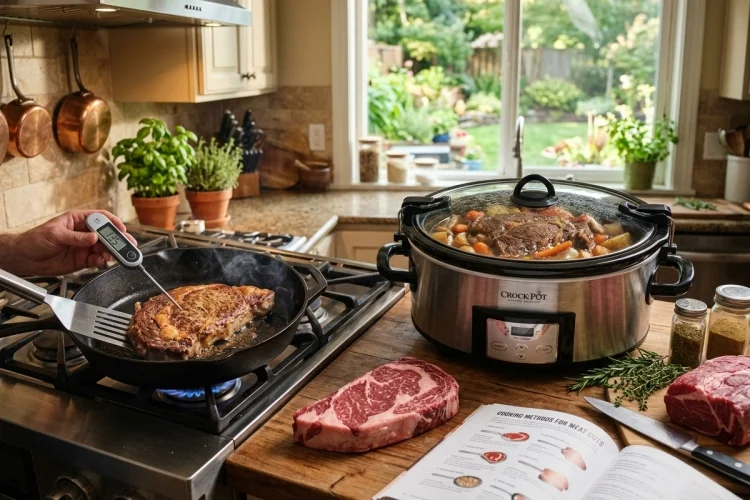
Buying a good piece of meat does not guarantee a good dinner. A tender steak can become dry after hours in a slow cooker, while a beef chuck roast may remain stubbornly chewy when cooked quickly in a hot pan.
The difference usually comes down to matching the cut with the correct technique. Some cuts need fast, intense heat to create browning without overcooking the center. Others need low temperatures, moisture, and plenty of time to soften their connective tissue.
Learning how to choose the right cooking method for different cuts of meat can save money and make everyday meals more reliable. Instead of always buying the most expensive option, you can turn affordable shoulders, shanks, and brisket into rich, tender dishes.
This guide explains how tenderness, fat, thickness, and muscle structure affect cooking. It also covers practical methods for beef, pork, lamb, and chicken, along with essential food-safety temperatures.
1. Start by Understanding the Cut
The first question is not simply, “Is this beef, pork, or lamb?” You also need to know which part of the animal the cut comes from.
Muscles that perform less work generally produce tender cuts suited to quick, dry-heat methods. Beef from the loin and rib, for example, is commonly grilled, broiled, or roasted.
Cuts from harder-working areas, such as the chuck and round, are usually less tender and often benefit from braising.
Connective tissue is another useful clue. Cuts containing more connective tissue may feel tough when cooked briefly, but slow cooking can gradually improve their texture. The amount and type of connective tissue are major factors in a cut’s underlying tenderness.
Also examine the thickness, fat level, and whether the meat contains bone. A thin chop cooks differently from a whole shoulder, even when both come from the same animal.
2. Use High, Dry Heat for Tender Steaks and Chops
Tender cuts are usually best cooked relatively quickly with direct or dry heat. Common methods include grilling, pan-searing, broiling, and oven roasting.
Ribeye, beef tenderloin, strip steak, pork tenderloin, lamb chops, and tender pork chops are familiar examples. These cuts do not need hours of cooking to soften tough connective tissue.
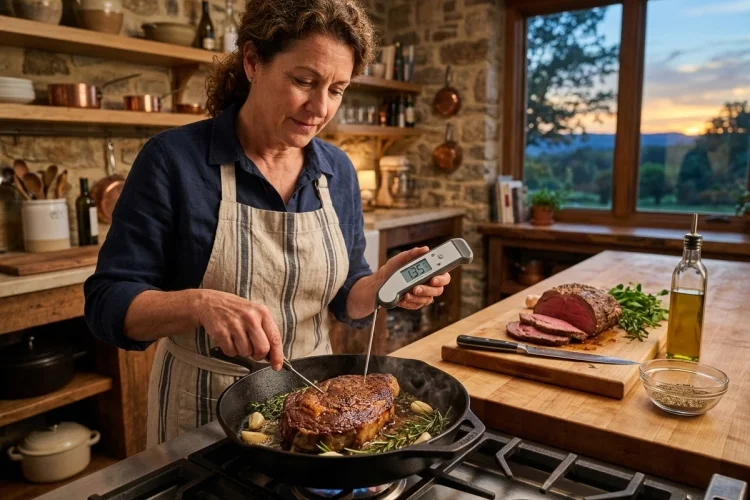
The aim is to brown the exterior while bringing the center to the desired safe temperature. Preheat the pan or grill, dry the surface of the meat, and avoid overcrowding. Too many pieces in one pan trap steam and make browning more difficult.
Pork tenderloin is a particularly lean and tender cut that works well with quicker cooking methods. The National Pork Board recommends cooking fresh pork tenderloin to 145°F, followed by a three-minute rest.
Do not assume that higher heat means leaving the meat unattended. Thick steaks and chops may benefit from an initial sear followed by gentler oven heat so the exterior does not burn before the center is ready.
3. Treat Lean Cuts Gently
Lean meat contains less fat to protect it from drying out. Chicken breast, pork loin, tenderloin, and some round cuts therefore require careful temperature control.
Chicken breasts can be grilled, pan-fried, baked, or poached. However, their uneven thickness can cause the thin end to become dry while the thickest section is still cooking.
Cutting large breasts into even portions or gently pounding them to a consistent thickness helps them cook more uniformly.
Poaching is a useful option for delicate, lean meat because the gentle, moist environment reduces aggressive surface heating. Baking at a moderate temperature and checking the center with a thermometer is another dependable approach.
Chicken thighs are more forgiving. Their higher moisture and fat content allow them to handle longer cooking methods such as grilling, roasting, and stewing more successfully than very lean breasts.
Regardless of the method, all poultry pieces should reach an internal temperature of 165°F or 74°C.
4. Braise Tough Shoulders, Shanks, and Chuck
Tougher cuts are often among the most flavorful and affordable choices in the butcher’s case. Beef chuck, brisket, lamb shanks, lamb shoulder, pork shoulder, and beef short ribs are classic examples.
These cuts generally benefit from low-and-slow cooking. Braising begins by browning the meat, then cooking it covered with a relatively small amount of liquid.
Stewing follows a similar principle, but the meat is usually cut into smaller pieces and more fully surrounded by liquid.
Moisture and time help soften collagen-rich structures that would remain chewy after quick grilling. USDA guidance specifically identifies beef chuck and round as less-tender areas suited to moist-heat cooking such as braising.
American Lamb recommends moist methods, including braising and stewing, for less-tender shoulder and shank cuts.
Keep the liquid at a gentle simmer rather than a violent boil. Strong bubbling can tighten muscle fibers, break vegetables apart, and evaporate the sauce too quickly. The meat is ready when it is safe and can be pierced or pulled apart easily.
5. Roast Large, Tender Cuts More Evenly
Roasting works well for larger cuts that are naturally tender enough to cook without being submerged in liquid. Beef rib roast, pork loin roast, leg of lamb, and whole poultry are familiar examples.
The oven surrounds the meat with dry heat, making it possible to brown the exterior while cooking the center gradually. Because thickness affects cooking time, a thermometer is far more dependable than calculating minutes per pound alone.
Some large cuts benefit from a high-temperature start or finish to create a browned crust. Others cook more evenly at a moderate temperature, particularly when they are lean.
Do not confuse pork loin with pork shoulder. Loin is relatively lean and can become dry during extremely long cooking, while shoulder contains more fat and connective tissue and is better suited to slow roasting, smoking, or braising.
Bone-in roasts may take longer than boneless versions of a similar weight and shape. American Lamb notes that bone-in and boneless cuts can require different cooking times, so temperature should remain the final guide.
6. Cook Thin, Fibrous Cuts Quickly and Slice Them Correctly
Some cuts fall between the categories of tender steak and slow-cooking roast. Flank steak, skirt steak, bavette, and hanger steak have strong muscle fibers but can still be excellent when cooked quickly.
Marinate them when desired, use high heat, and avoid cooking them for too long. After resting, identify the direction of the visible muscle fibers and slice across them rather than in the same direction.
Cutting across the grain shortens the fibers in each bite, making the meat easier to chew. University of Minnesota Extension recommends this approach for textured cuts such as skirt and flap steak.
Ground meat is different because grinding mixes the exterior throughout the product. Burgers, meatballs, sausages, and meatloaf therefore require a higher safe minimum temperature than intact beef, pork, lamb, or veal steaks and chops.
Cook ground beef, pork, lamb, and veal to 160°F or 71°C. Ground poultry should reach 165°F or 74°C.
7. Let Safety and Doneness Guide the Final Decision
A recipe’s cooking time is only an estimate. The actual result depends on the thickness of the cut, its starting temperature, the pan, the oven, the presence of bone, and the accuracy of your equipment.
Use an instant-read thermometer in the thickest section without touching bone, the pan, or a large pocket of fat.
For thin cuts, insert the probe through the side so its sensing area reaches the center. USDA recommends using a food thermometer to verify that meat and poultry have reached safe temperatures.
Whole cuts of beef, pork, lamb, and veal should reach at least 145°F or 63°C, followed by a three-minute rest. Ground versions should reach 160°F or 71°C, while poultry should reach 165°F or 74°C.
Remember that safety and tenderness are not always reached at the same moment. A pork shoulder may be microbiologically safe before its connective tissue has softened enough to pull apart.
Continue cooking tough braising cuts until they reach the desired texture, while avoiding unnecessary extra heat for tender, lean meat.
Choosing the right cooking method begins with understanding the cut. Tender steaks and chops usually perform best with fast, dry heat, while shoulders, shanks, chuck, and other connective-tissue-rich pieces need slower, moist cooking.
Lean cuts require careful temperature control, large roasts benefit from steady oven heat, and thin fibrous steaks should be cooked quickly and sliced across the grain. Whatever method you select, check the thickest part with a thermometer instead of relying on color or time alone.
The next time you shop for meat, read the cut name before choosing a recipe. Match its tenderness, thickness, and fat content to the cooking technique, and even an inexpensive cut can become a satisfying meal.