Salt is one of the smallest ingredients in a recipe, yet its timing can make a surprisingly big difference. Add it too late, and the surface may taste salty while the inside remains bland.
Add too much at the beginning of a reducing sauce, and the final dish may become nearly impossible to rescue. So, when should you add salt during cooking? The honest answer is that it depends on what you are making.
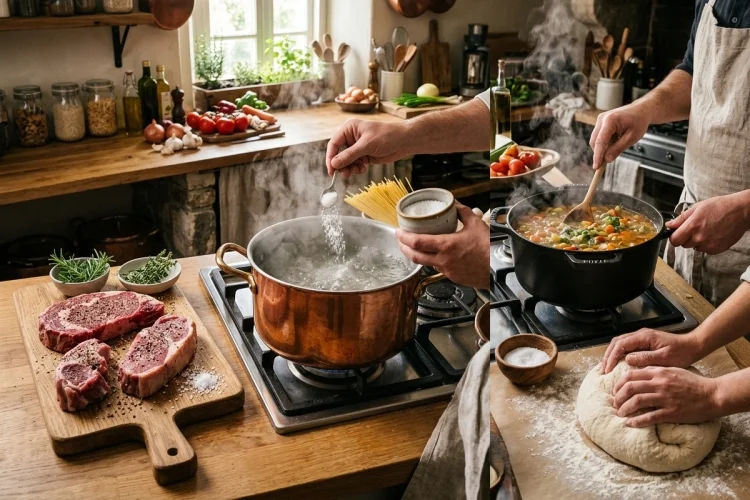
Meat often benefits from advance seasoning, pasta needs salt in its cooking water, and bread dough requires it during mixing. Soups and sauces usually need more caution because evaporation concentrates their seasoning.
The goal is not to follow one rigid rule. It is to understand whether the salt needs time to move into the food, whether moisture will evaporate, and whether other ingredients already contain sodium.
This guide explains the best time to season common foods, helping you create meals that taste balanced from the first bite to the last.
1. Should You Season at the Beginning or the End?
Adding salt early gives it time to dissolve and spread through liquids or move gradually into solid ingredients. This is particularly useful for meat, potatoes, pasta, rice, beans, and chunky soups.
Finishing with salt serves a different purpose. Salt added immediately before serving stays closer to the surface, creating a more noticeable burst of seasoning. Flaky finishing salt can also add texture to roasted vegetables, steak, eggs, bread, or chocolate desserts.
Seasoning in stages is useful when a dish contains several components. You might lightly season onions while sautéing them, add another small amount after pouring in stock, and make a final adjustment before serving.
However, adding salt repeatedly without tasting can quickly create problems.
Serious Eats testing suggests that early seasoning matters most for foods that need time to absorb salt, including meat and starchy ingredients; in simpler preparations, adjusting near the end may work just as well.
2. Salt Meat Before Cooking When Possible
Thin Cuts and Small Pieces
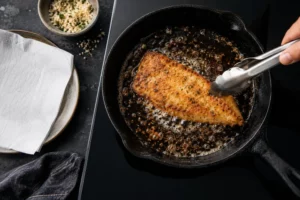
Thin chicken cutlets, fish fillets, ground meat, and small pieces for a stir-fry can be seasoned shortly before cooking. Because they have less distance for salt to travel, they do not require a long resting period.
Pat the surface dry before seasoning and cooking. Excess moisture can create steam in the pan, making deep browning more difficult.
Steaks, Roasts, and Poultry
Thicker meat generally benefits from being salted in advance. During dry brining, moisture initially appears on the surface, dissolves the salt, and is gradually reabsorbed.
Given enough time, the meat becomes more evenly seasoned, while its proteins can retain moisture more effectively during cooking.
For a steak, salting at least around 40 minutes ahead-or leaving it uncovered in the refrigerator overnight-can work well. Large roasts and whole poultry may benefit from an even longer rest.
Keep raw meat refrigerated throughout the process. USDA guidance recommends performing poultry brining in the refrigerator and using food-safe containers or bags.
3. Consider the Vegetable and Cooking Method
Vegetables do not all react to salt in exactly the same way. A simple approach for roasting is to toss cut vegetables evenly with oil and salt immediately before placing them on the tray.
This distributes the seasoning across every piece. It also avoids the bland patches that can occur when salt is sprinkled unevenly after the vegetables are already arranged.
Water-rich vegetables require more thought. Salting cucumbers, cabbage, zucchini, or eggplant in advance can draw out moisture. That may be helpful when making coleslaw, pickles, fritters, or dishes where excess liquid would create a watery result.
Some firmer vegetables can also benefit from brining. Testing reported by Serious Eats found that certain vegetables became more evenly seasoned and, in some cases, developed better texture after spending one to four hours in a salt solution.
The effect varied by ingredient, so advance brining should be treated as an optional technique rather than a rule for every vegetable.
Dry brined vegetables before high-heat cooking. Surface water can interfere with browning and encourage steaming.
4. Add Salt to Pasta, Rice, and Bean Water
Pasta absorbs water as it cooks, making the cooking liquid your main opportunity to season it internally. Add salt after the water becomes hot or reaches a boil, stir to dissolve it, and then add the pasta.
The popular instruction to make pasta water “as salty as the sea” is an exaggeration.
Serious Eats testing found approximately 1% salt by weight-around 10 grams per liter-to be a practical middle ground, although personal preference and the saltiness of the sauce should influence the amount.
Use less when the pasta will be finished with salty cheese, cured meat, olives, anchovies, or a heavily reduced sauce. Remember that adding several ladles of salted pasta water to a reducing sauce can make the final dish overly salty.
Rice should also cook in seasoned water or stock because it absorbs the liquid. For dried beans, you do not need to avoid salt out of fear that it will automatically make them tough.
Salting the soaking water and lightly seasoning the cooking liquid can produce beans that are creamy and flavorful throughout.
5. Season Soups and Stews Early-but Carefully
Soups containing meat, grains, potatoes, beans, or large vegetable pieces benefit from some early seasoning. Salt in the surrounding liquid needs time to move into those solid ingredients.
If you wait until the final minute, the broth may taste salty while the chunks inside remain underseasoned. Early salting can help starches hydrate in flavorful liquid and give salt time to diffuse into meat and vegetables.
Still, begin with less than you think you will need. Stock, bouillon, canned beans, tomatoes, sausage, cheese, and cured meat may already contain significant sodium.
Allow the dish to simmer before making the final adjustment. Taste both the liquid and a solid ingredient, such as a potato or piece of chicken. A well-seasoned broth does not guarantee that everything inside it tastes right.
6. Be Cautious with Sauces and Reductions
Sauces that will reduce should be salted conservatively at the beginning. When water evaporates, the salt stays behind, so its concentration increases even when you have not added more.
This is especially important for pan sauces, gravies, tomato sauces, curries, and glazes. Ingredients such as soy sauce, fish sauce, mustard, Parmesan, capers, and salted butter can further increase the final sodium level.
Add a modest amount early if the sauce contains vegetables or meat that need seasoning. Then let it cook down and taste again shortly before serving.
If a sauce is already salty, adding sugar usually hides the problem rather than solving it. Dilution is more dependable: add unsalted stock, water, dairy, tomatoes, or a larger quantity of the dish’s main ingredients.
7. Measure Salt Carefully in Baking
Savory cooking allows plenty of tasting and adjusting, but baking depends on more precise formulas. Add salt at the stage specified by the recipe, usually when mixing the dough or combining the dry ingredients.
In yeast bread, salt does more than provide flavor. It strengthens the gluten structure and slows yeast activity, helping the dough ferment at a controlled rate. Leaving it out can produce dough that rises too quickly, feels weak or sticky, and develops less flavor.
Too much salt can slow fermentation excessively and make dough firmer. For this reason, use a kitchen scale when possible and avoid casually substituting one type of salt for another by volume.
Fine table salt packs more tightly into a teaspoon than coarse kosher salt. Two equal spoonfuls of different salts may therefore contain different weights, potentially changing both flavor and dough performance.
The best time to add salt depends on what the ingredient needs. Season thick meat ahead of cooking, add salt to pasta and grain water, and give chunky soups enough time to absorb flavor.
Vegetables may be salted immediately before cooking or earlier when drawing out moisture is helpful. With sauces and stews that reduce, begin cautiously because the seasoning will become more concentrated.
In baking, follow the formula closely because salt influences both flavor and structure. During your next meal, taste at three points: before seasoning, halfway through cooking, and just before serving.
Notice how the flavor changes each time. That simple habit will help you use salt deliberately rather than relying on guesswork.