Baking can feel slightly intimidating when you first begin. Cooking often allows you to add a splash of this or an extra pinch of that, but baking seems to demand exact measurements, specific temperatures, and instructions such as “cream until fluffy” or “fold until just combined.”
The good news is that you do not need professional equipment or advanced pastry skills to make delicious cookies, muffins, cakes, and bread.
Successful baking usually comes from a few dependable habits: reading the recipe completely, measuring ingredients accurately, following the correct mixing method, and understanding how your oven behaves.
This baking for beginners guide explains the tools, ingredients, techniques, and safety rules you need to get started. It also covers common baking mistakes and simple ways to recognize when something is properly baked.
Start with an easy, well-tested recipe and follow it closely. Once you understand the basics, you can experiment with flavors and substitutions more confidently.
1. Start with a Few Essential Baking Tools
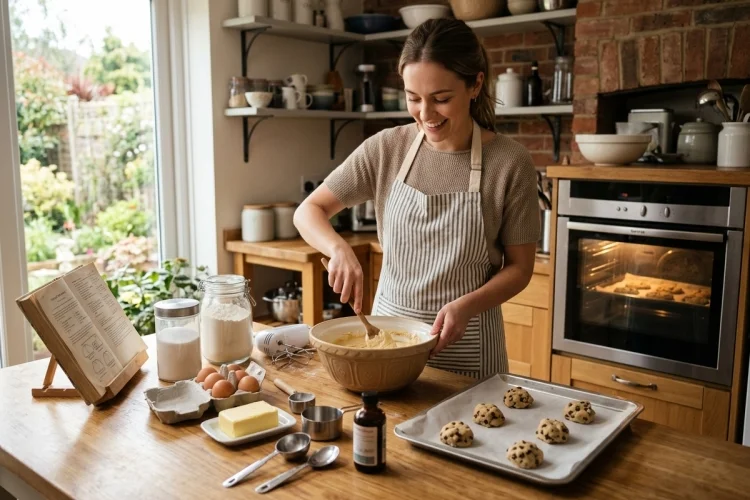
You do not need to fill your kitchen with expensive appliances. A mixing bowl, whisk, flexible spatula, measuring spoons, baking sheet, cake or loaf pan, cooling rack, and oven mitts can handle many beginner recipes.
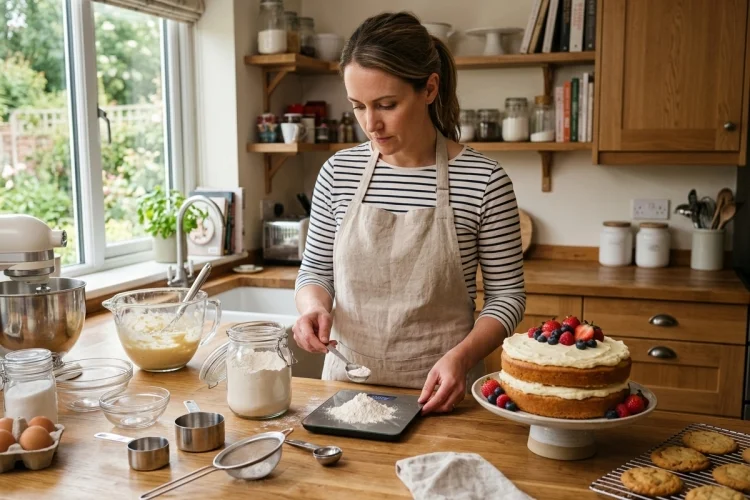
A digital kitchen scale is one of the most useful upgrades. Measuring by weight is more accurate than measuring by volume, especially for flour, which can become tightly packed inside a cup.
It also creates fewer dirty dishes because ingredients can often be weighed directly into the mixing bowl. King Arthur Baking describes a digital scale as an essential tool for achieving consistent results.
Choose metal baking pans when possible. Dark pans tend to absorb heat more quickly, while glass and ceramic dishes may heat differently and affect baking time.
Use the pan size specified in the recipe because changing its shape or volume can alter how quickly the center cooks.
2. Learn What the Main Ingredients Do
Flour Provides Structure
Flour contains proteins that can form gluten when combined with liquid and mixed. Gluten gives bread its chew and helps cakes, cookies, and muffins hold their shape.
All-purpose flour is the most practical choice for beginners because it works in a wide variety of recipes. Cake flour has less protein and can create a softer texture, while bread flour contains more protein and supports a stronger, chewier dough.
Fat Adds Flavor and Tenderness
Butter, oil, and shortening help create tenderness and carry flavor. Butter also contains water, which can produce steam during baking and contribute to texture.
The temperature of the fat matters. Soft butter can trap air when beaten with sugar, while cold butter creates flaky pockets in biscuits and pastry.
Sugar Does More Than Sweeten
Sugar contributes sweetness, browning, moisture, and tenderness. Reducing it dramatically may change the texture, color, and structure of a baked item, not just its flavor.
Eggs add structure, richness, color, and moisture. They can also trap air when beaten, which is essential in sponge cakes and certain desserts.
3. Understand Yeast and Chemical Leaveners
Leaveners create the gas that helps baked goods rise. The three most common options are baking soda, baking powder, and yeast.
Baking soda needs an acidic ingredient, such as buttermilk, yogurt, lemon juice, vinegar, brown sugar, or natural cocoa powder, to react properly.
Baking powder already includes both acidic and alkaline components, so it does not always require an additional acid in the recipe.
Yeast is a living microorganism used primarily in bread, rolls, and pizza dough. It consumes available sugars and produces carbon dioxide, gradually making the dough expand.
Both fresh and dry yeast perform this basic function, although different varieties may be handled differently.
Do not casually swap one leavener for another. Baking soda, baking powder, and yeast work differently and can significantly change a recipe’s flavor, rise, and texture.
4. Measure Ingredients Accurately
Baking works through ratios, so measurement errors can have noticeable consequences. Too much flour may produce dry cookies, crumbly cake, or heavy bread, while too little can create batter that spreads or fails to hold its structure.
A kitchen scale offers the most dependable results. Place your bowl on the scale, press the tare button to return the display to zero, and add the ingredient until you reach the required weight.
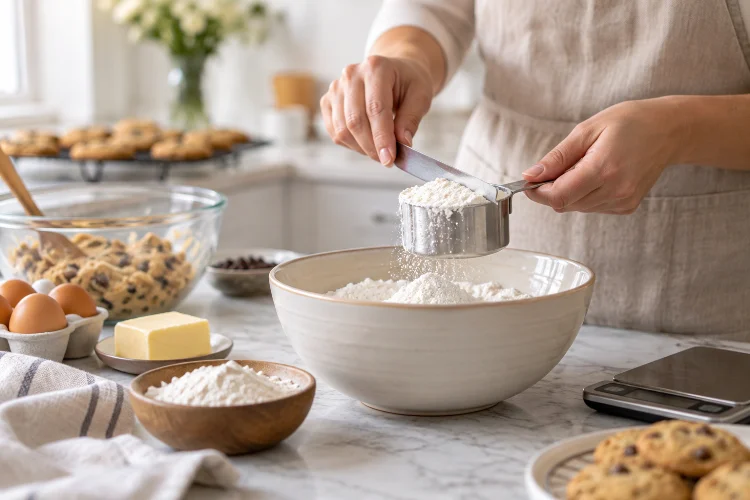
When measuring flour with cups, loosen it first, spoon it gently into the cup, and level the top with a straight edge. Do not push the measuring cup directly into the flour bag, because this can pack in more flour than the recipe intends.
Use liquid measuring cups for water, milk, or oil. Place the cup on a flat surface and read it at eye level rather than holding it in the air.
5. Follow the Correct Mixing Method
Mixing is not simply about combining everything into one bowl. Different methods create different textures.
Creaming butter and sugar incorporates tiny air pockets, helping cakes and cookies feel lighter. Folding gently combines airy ingredients, such as whipped egg whites, with heavier mixtures while minimizing lost volume.
For muffins, pancakes, and many quick breads, mix only until the dry ingredients are moistened. Overmixing can develop too much gluten, producing a tough or chewy texture. A few small lumps are usually better than a perfectly smooth batter.
However, not every cake should be mixed as little as possible. Some recipes require several minutes of beating to develop the correct structure. The safest rule is to follow the stated mixing time and method rather than applying the same technique to every batter.
6. Get to Know Your Oven
Preheat the oven before mixing unless the recipe specifically says otherwise. Cakes, cookies, muffins, and quick breads often depend on immediate exposure to the correct temperature for proper rising and structure.
Do not assume the oven’s display is perfectly accurate. An inexpensive oven thermometer can reveal whether your appliance runs hotter or cooler than its setting. Ovens can also have hot spots that cause one side of a tray to brown faster.
Place the rack where the recipe recommends, usually near the center for general baking. Avoid opening the door repeatedly because each check releases heat and may affect delicate cakes or breads.
Begin checking a few minutes before the suggested time ends. Cookies may be ready when their edges are set, while cakes should spring back lightly and a tester inserted near the center should emerge without wet batter.
7. Avoid Common Beginner Baking Mistakes
Read the entire recipe before starting. This prevents surprises such as discovering that butter should be softened, dough needs two hours to chill, or bread requires an additional rising period.
Prepare the pan before mixing. Grease it, line it with parchment, or leave it ungreased according to the recipe. Using the wrong preparation can cause cakes to stick or cookies to spread differently.
Allow baked goods to cool as directed. Cutting bread immediately can create a gummy interior, while moving a hot cake too soon may cause it to break. Cooling cookies on the tray for a few minutes helps them firm up before they are transferred to a rack.
Finally, do not taste raw dough or batter. Flour is a raw agricultural product and may carry harmful bacteria, while some mixtures also contain uncooked eggs.
The FDA advises baking or cooking flour-containing products according to their instructions and washing hands, surfaces, and utensils after handling raw flour.
Baking for beginners becomes much easier when you focus on a few reliable principles. Use basic equipment, measure accurately, understand the role of each ingredient, and follow the recipe’s mixing method instead of improvising too early.
Preheat your oven, use the correct pan, and watch for physical signs of doneness rather than depending entirely on the timer. Remember to handle raw flour and batter safely, and give finished baked goods enough time to cool.
Choose one simple recipe this week, such as muffins, drop cookies, banana bread, or a basic loaf. Read it completely, prepare your tools, and follow each step carefully.
Every batch will teach you something, and consistent practice will gradually turn baking from a stressful science experiment into an enjoyable kitchen skill.