Have you ever roasted mixed vegetables only to find that the zucchini has collapsed while the potatoes are still almost raw? It is not necessarily a problem with your oven or your cooking skills. Vegetables simply do not respond to heat at the same speed.
Understanding why different vegetables need different cooking times makes it easier to prepare soups, stir-fries, steamed sides, and sheet-pan dinners without mixing mushy pieces with undercooked ones.
Timing depends on the vegetable’s density, water content, cell structure, freshness, and size. The cooking method matters too. Thin asparagus may steam in minutes, while a whole beet can take much longer to roast.
Once you stop treating every vegetable as if it behaves the same way, cooking becomes less confusing. Instead of relying only on a timer, you can use texture, color, and visual cues to decide when each ingredient is ready.
1. Vegetable Structure Determines How Fast It Softens
Vegetables are made from plant cells supported by firm cell walls. Heat gradually weakens those structures, making the food softer.
University of Minnesota Extension explains that boiling water or steam weakens vegetable cell walls, which is why prolonged cooking eventually removes their crunch.
Leafy greens such as spinach contain thin, delicate tissues and wilt quickly. Carrots, potatoes, beets, and winter squash have denser structures, so heat takes longer to reach and soften their centers.
Pectin also contributes to firmness in plant tissues. As heat changes this structure, vegetables become increasingly tender and may eventually turn mushy.
2. Tender and Dense Vegetables Need Different Treatment
Spinach, peas, mushrooms, zucchini, and thin asparagus are quick-cooking vegetables. They usually need only a short sauté, steam, or stir-fry to soften while keeping some color and texture.
Root vegetables, tubers, thick cabbage wedges, and winter squash take longer because their tissues are more compact. Even similar-looking vegetables can behave differently: cauliflower is denser than broccoli and may need different preparation or timing when roasted.
This is why an instruction such as “cook the vegetables for ten minutes” is incomplete unless it also identifies the vegetable, cut size, and cooking method.
3. Size and Shape Can Change Cooking Time
A whole carrot and a thin carrot coin are the same ingredient, but the coin cooks much faster. Small pieces expose more surface area to heat and leave a shorter distance between the exterior and center.
Official blanching guidance demonstrates this clearly. The National Center for Home Food Preservation gives different times for small, medium, and large asparagus stalks and Brussels sprouts.
Cut vegetables into reasonably even pieces so they finish together. In mixed dishes, you can also cut slow-cooking carrots or potatoes smaller while leaving quick-cooking zucchini or peppers in larger chunks.
4. Every Cooking Method Transfers Heat Differently
Boiling and Steaming
Boiling surrounds vegetables with hot water, while steaming uses hot vapor. Both work quickly, but boiling can allow flavor and water-soluble compounds to move into the liquid. Steaming is useful when you want to preserve more natural flavor, color, and texture.
Roasting
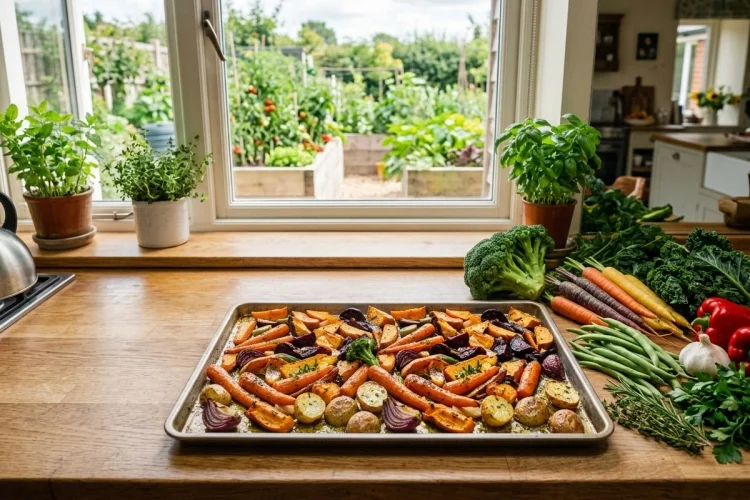
Roasting generally takes longer than boiling or steaming. However, its dry environment encourages browning, removes surface moisture, and concentrates the natural sweetness of vegetables.
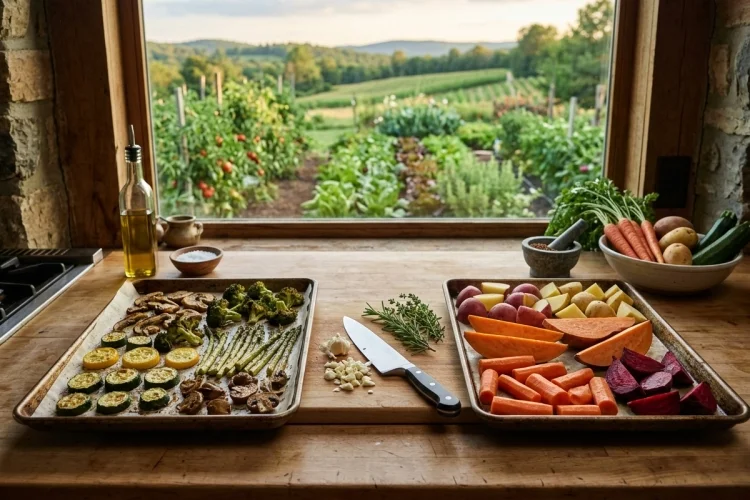
Root vegetables may need plenty of time to become tender, while water-rich produce such as zucchini cooks more quickly. Leaving space between the pieces allows moisture to escape instead of turning the tray into a steamy environment.
Sautéing and Stir-Frying
Sautéing and stir-frying cook small pieces rapidly through contact with a hot pan. NDSU Extension notes that stir-fried vegetables are cut into small pieces and cooked quickly until crisp-tender.
The pan must remain hot. Overcrowding lowers the temperature, traps moisture, and changes both the timing and final texture.
5. Fresh, Mature, and Frozen Produce Behave Differently
A young green bean is usually more tender than a thick, mature one. Older cabbage leaves may also have dense central veins that need longer cooking or should be removed.
Many frozen vegetables are blanched before freezing. Freezing also creates ice crystals that can damage cell walls, so thawed produce is often softer than fresh vegetables and may cook more quickly.
For soups, steaming, or boiling, many frozen vegetables can go directly into the pan. Add them later than dense fresh ingredients and use the package instructions as a starting point.
Freshness matters as well. Vegetables that have lost moisture during storage may soften or brown differently from newly purchased produce.
6. Add Mixed Vegetables in Stages
The easiest way to cook several vegetables evenly is to stop adding them all at once. Begin with ingredients that need the most time, then introduce tender vegetables later.
For a stir-fry, start with carrots, broccoli stems, or dense cabbage. Add mushrooms, peppers, and zucchini after the firmer vegetables begin to soften. Spinach and fresh herbs usually belong near the end.
The same principle works in soup. Potatoes and carrots can simmer first, while peas, green beans, or leafy vegetables are added during the final minutes.
On a roasting tray, give root vegetables a head start before adding broccoli, tomatoes, or zucchini. Staged cooking creates better texture without requiring several separate pans.
7. Test Doneness Instead of Trusting the Clock
Cooking times are estimates. Your stove, pan, oven accuracy, piece size, starting temperature, and preferred texture can all change the result.
Use a fork, knife, or tasting test. Root vegetables should be easy to pierce without falling apart. Green vegetables should remain bright and tender with a slight bite unless the recipe calls for a softer result.
Check early, especially when steaming or blanching. The National Center for Home Food Preservation warns that overblanching causes losses in flavor, color, vitamins, and minerals, while rapid cooling prevents continued softening.
Remember that residual heat continues cooking vegetables after they leave the stove. Removing them just before they reach your ideal texture can help prevent overcooking.
Different vegetables need different cooking times because they vary in density, water content, cell structure, maturity, and size. Thin leafy greens soften almost immediately, while roots and tubers need more time for heat to reach their centers.
The cooking technique changes the schedule as well. Steaming and boiling work quickly, roasting takes longer but adds browning, and stir-frying depends on small pieces and a properly heated pan.
When preparing several vegetables together, cut them strategically or add them in stages. During your next mixed vegetable dish, do not start one timer and hope for the best.
Taste as you cook, watch the color, and test each ingredient’s texture. That simple habit will produce vegetables that are more flavorful, colorful, and evenly cooked.