Washing your hands may seem like the easiest part of cooking. Turn on the water, add a little soap, rub quickly, and you are ready to chop vegetables-right? Unfortunately, rushed handwashing often misses the fingertips, thumbs, spaces between the fingers, and areas underneath the nails.
Your hands touch phones, door handles, pets, food packaging, raw ingredients, and countless other surfaces throughout the day. When you begin preparing a meal, anything on your skin can potentially move onto knives, cutting boards, seasonings, and ready-to-eat food.
Learning how to wash your hands properly before cooking is therefore one of the simplest ways to improve kitchen hygiene. The correct method takes only about 20 seconds of scrubbing, but it can help stop germs from spreading between your hands, ingredients, equipment, and family.
This guide explains when handwashing is necessary, how to do it correctly, which areas are commonly missed, and why gloves or hand sanitizer do not always provide the protection people expect.
1. Why Handwashing Matters in the Kitchen
Your hands can transfer germs from one surface or ingredient to another. For example, touching raw chicken and then opening a spice jar may contaminate the lid, which could later be touched while preparing a salad.
Handwashing is especially important because contaminated food does not always look, smell, or taste unusual. Kitchen hygiene needs to prevent contamination rather than waiting for obvious warning signs.
The CDC describes frequent handwashing with soap and water as one of the most important ways to prevent germs from spreading while food is being prepared.
It recommends cleaning your hands before, during, and after cooking-not only when you first enter the kitchen.
Proper technique also matters. In one USDA observational study, 95% of participants who attempted to wash their hands did not complete the process correctly, with many failing to scrub for the full recommended time.
2. Follow the Five Basic Handwashing Steps
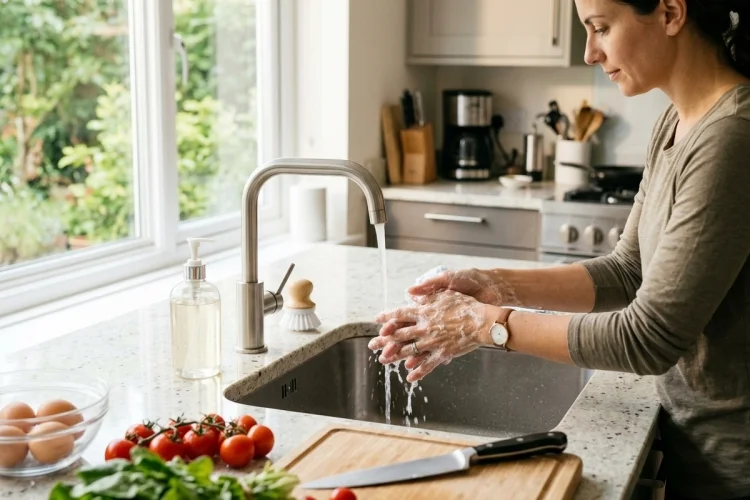
Effective handwashing can be remembered through five simple actions: wet, lather, scrub, rinse, and dry.
Step 1: Wet Your Hands
Place your hands under clean, running water. The water can be warm or cold, so choose a comfortable temperature that encourages you to wash thoroughly.
Running water is preferable to washing in a basin because it carries loosened dirt and germs away from the skin.
Step 2: Apply Soap and Create a Lather
Apply enough plain soap to cover both hands. Rub your palms together until the soap forms a lather.
You do not need antibacterial soap for normal home use. CDC guidance indicates that ordinary soap and water are effective, and consumer antibacterial soaps have not been shown to provide an added health benefit over plain soap for everyday handwashing.
Step 3: Scrub for at Least 20 Seconds
Scrub your hands for at least 20 seconds. Count slowly, use a timer, or hum a familiar song long enough to avoid finishing too quickly.
Pay attention to your palms, the backs of both hands, between every finger, around the thumbs, near the wrists, and underneath the nails. These areas are easy to miss when you only rub your palms together.
Evidence reviewed by the CDC suggests that scrubbing for approximately 15 to 30 seconds removes more germs than washing for a shorter period, which supports the practical 20-second recommendation.
Step 4: Rinse Thoroughly
Rinse your hands under clean, running water. Continue until the soap and any loosened residue have been washed away.
Keep your fingertips pointing downward when practical so the water flows toward them rather than back toward your wrists.
Step 5: Dry Completely
Dry your hands with a clean towel, disposable paper towel, or air dryer. Avoid using a damp kitchen cloth that has already been used to wipe counters or handle spills.
Drying is part of the handwashing process, not an optional final detail. The CDC’s recommended method includes thorough drying after rinsing.
3. Know When to Wash During Cooking
Wash your hands before touching ingredients, equipment, or ready-to-eat food. Starting with clean hands gives you a safer preparation area.
You should wash them again after handling raw meat, poultry, seafood, or eggs. Their juices can remain on your fingers and spread to refrigerator handles, seasoning containers, taps, and utensils.
Handwashing is also necessary after using the bathroom, touching pets, handling garbage, changing a diaper, coughing, sneezing, blowing your nose, or cleaning up something dirty.
FDA and USDA guidance specifically recommends washing before and after food preparation and after activities that can contaminate the hands.
Do not forget your phone. If you check a recipe, answer a message, or take a photograph while cooking, wash your hands before returning to food preparation.
The FDA identifies smartphones and tablets as possible sources of kitchen contamination and recommends minimizing contact with them while handling food.
4. Pay Attention to Commonly Missed Areas
Most people naturally focus on their palms, but the parts of the hands that touch food are not limited to the palms. Fingertips hold vegetables, thumbs grip utensils, and the backs of the fingers may touch ingredients while kneading or mixing.
Interlace your fingers while lathering to clean the spaces between them. Rub each thumb with the opposite hand, then move your fingertips in a circular motion against the opposite palm to clean around the nails.
Keep fingernails reasonably short and clean, especially when you regularly prepare food by hand. Long or artificial nails can make thorough cleaning more difficult and may trap residue.
Rings can also interfere with handwashing. You do not have to remove every piece of jewelry before making a sandwich, but removing bulky rings is sensible when handling dough, raw meat, or sticky mixtures.
5. Avoid the Most Common Handwashing Mistakes
The most frequent mistake is washing too quickly. A brief splash and rinse may remove visible dirt, but it does not provide enough time to scrub every surface properly.
Another mistake is applying soap to dry hands and immediately rinsing it away. Wetting, lathering, and creating friction are all important parts of the process.
Do not wipe freshly washed hands on your clothing, apron, or a used dish towel. These surfaces may return dirt and germs to your skin. Keep a clean towel specifically for drying hands and replace it regularly.
You should also avoid touching raw food packaging after washing and then continuing without cleaning your hands again. The outside of packages containing meat or poultry may have come into contact with leaking juices.
Finally, do not wash raw meat as a substitute for washing your hands. USDA guidance advises against rinsing raw meat and poultry because splashing water can spread bacteria around the sink and nearby surfaces.
Cooking to a safe internal temperature is what makes these foods safer to eat.
6. Understand When Hand Sanitizer Is Appropriate
Hand sanitizer is helpful when soap and clean running water are unavailable. Choose a product containing at least 60% alcohol, apply enough to cover every surface, and rub your hands together until they feel dry.
However, sanitizer should be considered a backup rather than the first choice during ordinary food preparation. It may be less effective when hands are visibly dirty, greasy, or covered with food residue.
For example, sanitizer is not a suitable replacement after shaping raw hamburger patties, handling sticky dough, or peeling muddy vegetables. Soap, water, friction, rinsing, and drying are more appropriate in these situations.
Never rinse or wipe sanitizer off before it dries. It needs enough contact time to work properly.
7. Remember That Gloves Do Not Replace Clean Hands
Disposable gloves can provide a useful barrier for certain tasks, but they do not remove the need for handwashing. Wash and dry your hands before putting gloves on and again after taking them off.
Change gloves whenever you move from raw ingredients to cooked or ready-to-eat food. Gloves used to handle raw chicken should never touch salad leaves, bread, cooked meat, or serving utensils.
Replace them if they tear, become dirty, or touch your phone, face, hair, garbage bin, or another potentially contaminated surface. Wearing one pair throughout the entire cooking process may spread germs just as easily as unwashed hands.
At home, clean hands and utensils are usually enough for normal meal preparation. Tongs, spoons, or deli paper can also reduce direct contact with ready-to-eat food without creating unnecessary waste.
Knowing how to wash your hands properly before cooking is a basic skill with a major role in food safety. Wet your hands under clean running water, apply soap, scrub every surface for at least 20 seconds, rinse thoroughly, and dry them with a clean towel or air dryer.
Repeat the process whenever your hands may have become contaminated, especially after touching raw animal products, garbage, pets, phones, or your face. Remember that sanitizer and gloves can be useful, but neither automatically replaces proper handwashing.
Before preparing your next meal, slow down and complete all five steps. Turn this simple routine into a habit, and you will help keep your ingredients, kitchen surfaces, and finished food cleaner and safer.