
Meal planning sounds simple until you sit down with a blank page and try to decide what you will eat for the next seven days. Suddenly, you are expected to predict your schedule, appetite, energy level, grocery budget, and willingness to cook on Thursday night.
The good news is that weekly meal planning does not require seven elaborate recipes or an entire Sunday spent filling matching containers. A useful plan should reduce decisions, not create another exhausting project.
Learning how to plan a week of meals without feeling overwhelmed begins with flexibility. You can choose a few main meals, leave space for leftovers, and keep easy backup options for evenings when life does not follow the calendar.
This guide explains how to build a realistic weekly menu, shop more efficiently, reuse ingredients, and prepare enough food without becoming bored. The goal is not a perfect meal-prep routine. It is a simple system that helps you eat well with less daily stress.
1. Check Your Week Before Choosing Meals
Start with your calendar rather than a recipe website. Look at work hours, appointments, social plans, school activities, and evenings when you are likely to arrive home late.
Match the difficulty of each meal to the time and energy available. A busy Monday might need a quick pasta dish, while a quiet Saturday could be a better time to try a new recipe.
Do not automatically plan seven cooked dinners. Restaurant plans, takeout nights, leftovers, or unexpected schedule changes may make some meals unnecessary.
USDA MyPlate recommends planning weekly meals around the food already available, the dishes your household enjoys, and ingredients that offer good value.
2. Take Inventory Before Writing a Grocery List
Check your refrigerator, freezer, and pantry before deciding what to cook. Look for produce that needs to be used soon, open packages, frozen proteins, grains, canned foods, and sauces that can become the starting point for a meal.
A bag of spinach may inspire omelets or pasta. Leftover rice can become fried rice, while canned beans can turn into tacos, soup, or a quick grain bowl.
This “shop your kitchen first” habit prevents duplicate purchases and gives you a smaller set of choices. It can also reduce food waste because your menu is built around ingredients that might otherwise be forgotten.
Planning, preparing, and storing food carefully can help households waste less, according to the US Environmental Protection Agency.
3. Use a Flexible Meal Formula
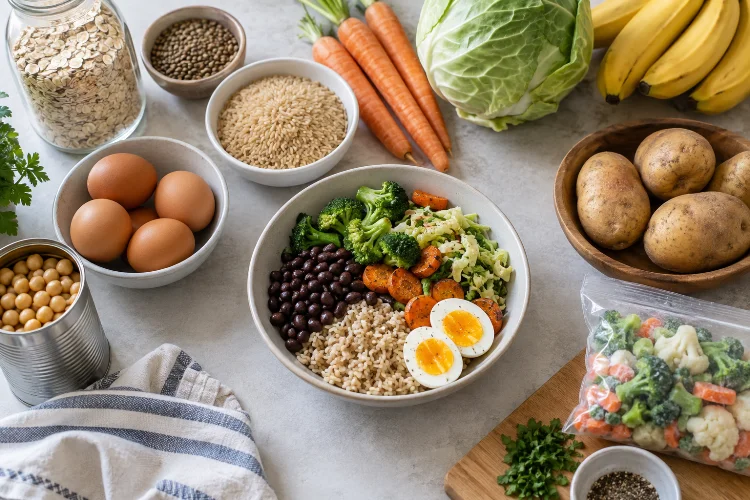
You do not need a completely different recipe every night. Build meals with a simple formula: a protein, a vegetable, a carbohydrate, and a sauce or seasoning.
For example, roasted chicken, broccoli, rice, and yogurt sauce create one complete meal. Replace the chicken with beans, the broccoli with peppers, or the rice with potatoes, and you have several variations without learning an entirely new cooking method.
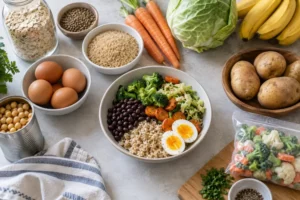
The Harvard Healthy Eating Plate suggests making vegetables and fruits a large part of the meal, with the remaining space generally divided between whole grains and healthy protein. It can be used as a practical visual guide rather than a strict daily formula.
Choose foods that suit your preferences, culture, budget, and dietary needs. A plan is only useful when you genuinely want to eat what is on it.
4. Pick Three or Four Main Meals
Planning fewer main dishes is one of the easiest ways to reduce pressure. Instead of selecting seven separate dinners, choose three or four meals that can provide leftovers or reusable components.
A simple week might look like this:
Monday could be sheet-pan chicken and vegetables. Tuesday uses the leftover chicken in wraps. Wednesday is pasta with tomato sauce and salad. Thursday becomes a leftover or freezer night. Friday could be bean tacos, followed by a flexible weekend meal.
This approach creates variety without requiring a completely new ingredient list every day. It also leaves space for schedule changes.
Harvard’s meal-prep guidance notes that there is no single correct way to plan meals. It suggests choosing a regular time to plan the menu, make the grocery list, shop, and complete any useful preparation.
5. Choose Ingredients That Work More Than Once
The easiest weekly menus have overlapping ingredients without making every meal taste identical. One batch of roasted vegetables can become a side dish, grain-bowl topping, omelet filling, or pasta addition.
Cooked chicken can be served with potatoes on the first night and used in sandwiches or soup later. A pot of rice may accompany curry, become fried rice, or form the base of a lunch bowl.
Change the seasoning to prevent repetition. Rice and chicken can taste Mediterranean with lemon and herbs, Mexican-inspired with salsa and cumin, or Asian-inspired with soy sauce and ginger.
Avoid buying one unusual ingredient for a recipe unless you already know how to use the remainder. Prioritize adaptable items such as eggs, onions, frozen vegetables, beans, rice, pasta, yogurt, canned tomatoes, and a few dependable seasonings.
6. Prep Components Instead of Complete Meals
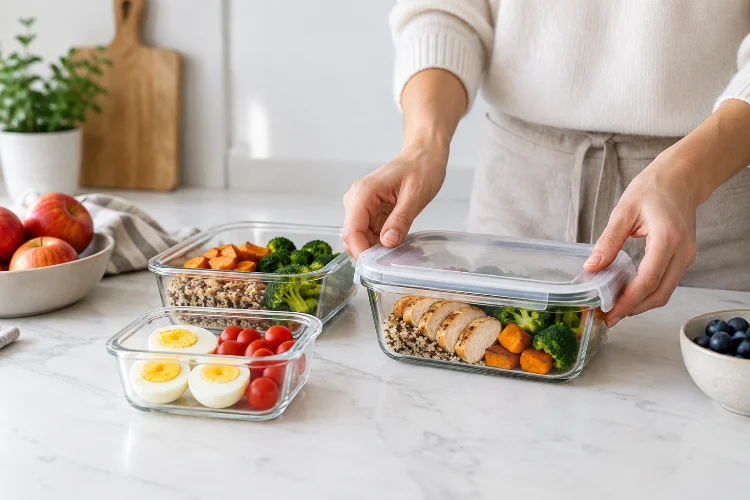
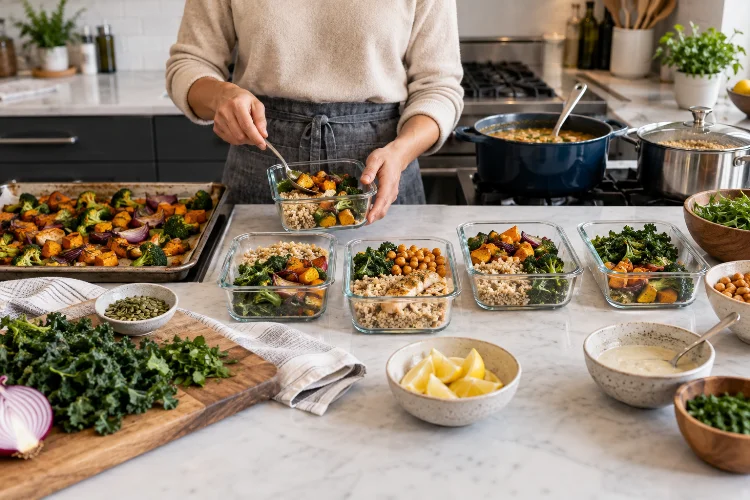
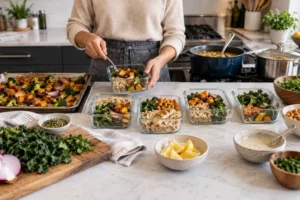
Meal preparation does not have to mean cooking every dish in advance. Preparing a few components may offer more flexibility and require less time.
You might wash salad greens, chop sturdy vegetables, cook a grain, prepare a sauce, or portion snacks. When dinner time arrives, much of the repetitive work is already finished.
Focus on the task that creates the biggest weekday obstacle. When chopping feels exhausting after work, prepare vegetables ahead. When cooking grains takes too long, make a larger batch. When mornings are rushed, prepare overnight oats or portion breakfast ingredients.
Store prepared food safely. The FDA recommends refrigerating perishables promptly and dividing large quantities of leftovers into shallow containers so they cool faster.
Keep the refrigerator at 40°F, or approximately 4°C, or below. Use covered containers or sealed storage bags, and check stored food regularly rather than allowing leftovers to disappear behind newer items.
7. Plan for Leftovers and Low-Energy Nights
A meal plan becomes stressful when it assumes that you will always have the time and motivation to cook. Include at least one leftover night and one emergency meal.
Backup meals should be easy, familiar, and made mostly from foods that keep well. Examples include eggs on toast, frozen soup, pasta with jarred sauce, quesadillas, canned tuna sandwiches, or rice with frozen vegetables.
Keep a visible “eat first” section in the refrigerator for ingredients and leftovers that need attention. You can also freeze extra portions when you know they will not be eaten within the next few days.
The FDA recommends refrigerating or freezing leftovers within two hours and using appropriate storage guidance to determine how long particular foods can be kept safely.
A flexible plan is not a failed plan. Swapping Wednesday’s dinner with Friday’s, eating leftovers earlier, or ordering food after a difficult day simply means you are adapting the schedule.
8. Write a Grocery List That Matches the Plan
Once the menu is ready, list only the ingredients you actually need. Subtract anything already available at home and check quantities rather than assuming every item must be replaced.
Organize the list by store section, such as produce, meat, dairy, pantry, and frozen food. This reduces unnecessary movement through the store and makes forgotten ingredients less likely.
Be realistic about portions. Buying for an imaginary week of perfect cooking often creates waste, while purchasing slightly less leaves room for unexpected meals outside the home.
MyPlate recommends planning meals before shopping and using a grocery list to support healthier, budget-conscious choices.
Before checking out, ask whether every perishable item has a clear purpose. When you cannot name the meal or snack that will use it, consider leaving it behind.
Learning how to plan a week of meals without feeling overwhelmed is about reducing decisions, not controlling every detail. Begin with your calendar, check what you already own, and choose three or four flexible meals rather than seven complicated recipes.
Reuse ingredients across different dishes, prepare only the components that save meaningful time, and include leftovers and emergency meals in the schedule. Store prepared food safely and adjust the plan whenever your week changes.
Set aside fifteen minutes before your next grocery trip. Write down your busiest evenings, choose a few realistic meals, and build a list around them. A simple plan you can follow is far more useful than an impressive menu that leaves you exhausted by Tuesday.