Cooking can feel intimidating when recipes use unfamiliar terms, pans heat unpredictably, and every ingredient seems to require a different technique.
The good news is that you do not need professional equipment, natural talent, or dozens of recipes to make satisfying food at home.
Learning how to start cooking is mostly about building repeatable habits. You organize ingredients before turning on the stove, control the heat instead of automatically choosing the highest setting, taste food as it cooks, and select simple dishes that teach useful skills.
This complete beginner’s guide covers essential kitchen tools, basic cooking methods, food-safety rules, and easy meal-building strategies. You will also learn how to read a recipe properly and improve through practice.
Start small, accept that a few meals will be imperfect, and remember that confidence comes from repetition-not from creating restaurant-quality food on your first attempt.
1. Begin with Easy, Skill-Building Meals
New cooks often choose complicated dishes requiring several pans, exact timing, and long shopping lists. Start with recipes built around one main technique, such as boiling pasta, scrambling eggs, roasting vegetables, or cooking rice.
Pasta with tomato sauce teaches boiling, seasoning, and checking texture. A vegetable omelet develops knife control and heat management, while roasted vegetables teach oven timing.
Cook two or three times a week during your first month. Repeat successful dishes and change one detail each time, such as the heat level, seasoning, or size of the vegetable pieces.
2. Build a Small but Useful Kitchen Toolkit
A chef’s knife, stable cutting board, frying pan, medium saucepan, baking sheet, mixing bowl, spatula, tongs, measuring tools, and food thermometer can handle many beginner recipes.
Serious Eats also identifies a sharp chef’s knife, cutting board, and versatile skillet as core starter equipment. Choose tools that feel comfortable and are easy to clean rather than buying expensive gadgets immediately.
Keep your knife sharp and place a damp towel underneath a slippery cutting board. A stable workspace makes preparation safer and less frustrating.
3. Read and Prepare Before Cooking
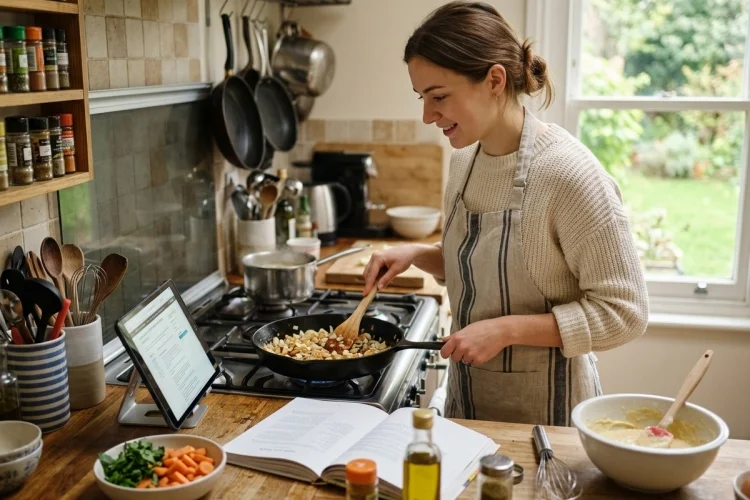
Read every recipe from beginning to end before turning on the stove. Check the total time, required equipment, ingredient preparation, and steps where several tasks happen quickly.
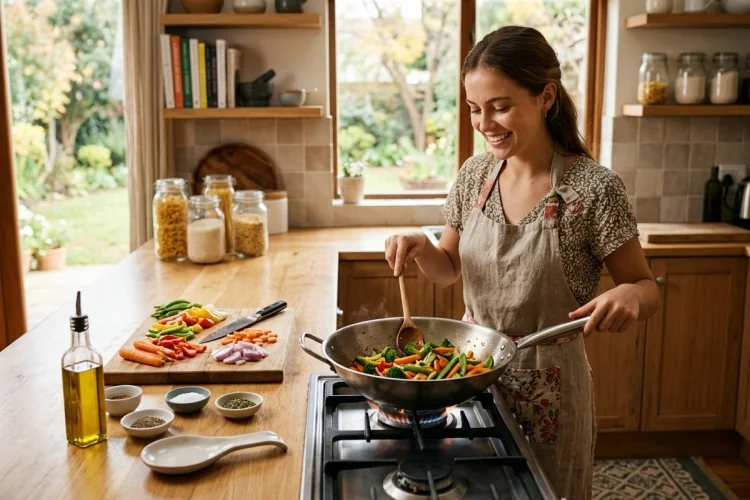
Prepare ingredients in advance by chopping vegetables, opening cans, measuring spices, and placing utensils nearby. This habit is called mise en place. BBC Good Food notes that weighing, measuring, and chopping before cooking makes the process easier to manage.
Accuracy matters most in baking. King Arthur Baking recommends weighing flour with a digital scale; when using cups, fluff the flour, spoon it into the cup, and level the top instead of packing it down.
4. Master Four Basic Cooking Techniques
Boiling and Simmering
Boiling uses strong bubbles and works well for pasta. Simmering is gentler and better for soups, sauces, and stews because liquid reduces more slowly.
Sautéing
Sautéing cooks small pieces of food in a little oil over medium or medium-high heat. Preheat the pan and avoid overcrowding, since too much food traps moisture and causes steaming instead of browning.
Roasting
Roasting is beginner-friendly because the oven does most of the work. Cut ingredients into similar sizes, coat them lightly with oil and seasoning, and spread them in one layer.
Safe Chopping
Cut slowly and evenly before worrying about speed. Curl the fingertips of your guiding hand inward and use a sharp knife. A sharp blade can be safer than a blunt one because it needs less pressure and is less likely to slip.
5. Understand Heat and Seasoning
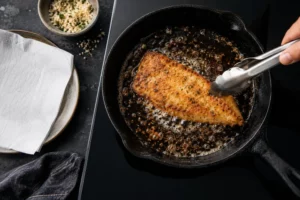
High heat is not always better. Eggs usually need low or medium heat, sauces benefit from gentle simmering, and browning requires a hot pan without uncontrolled smoking.
Treat recipe times as estimates. Pan material, stove strength, ingredient size, and starting temperature affect cooking speed. Look for signs such as golden edges, softened onions, thickened sauce, or pasta that is tender with a slight bite.
Season gradually and taste whenever it is safe. Salt strengthens flavor, lemon juice or vinegar can brighten a flat dish, and a little fat can soften harsh flavors. Before adding anything, ask whether the food is bland, too salty, too rich, too sour, dry, or watery.
6. Follow Basic Food-Safety Rules
FoodSafety.gov summarizes safe home cooking in four steps: clean, separate, cook, and chill. Wash hands and surfaces, keep raw meat away from ready-to-eat foods, cook ingredients thoroughly, and refrigerate perishables promptly.
Do not wash raw poultry, because splashing water can spread germs around the sink and countertop. Use separate boards or thoroughly cleaned surfaces for raw meat and produce.
A thermometer is more reliable than color alone. USDA guidance lists minimum temperatures of 165°F, or about 74°C, for poultry; 160°F, or about 71°C, for ground meat; and 145°F, or about 63°C, for whole cuts of beef, pork, veal, and lamb, followed by the recommended resting time.
7. Build Meals with a Flexible Formula
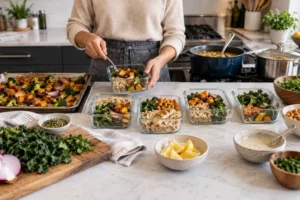
Use a simple meal formula: one protein, one vegetable, one carbohydrate, and one sauce or seasoning. For example, combine roasted chicken, broccoli, rice, and lemon yogurt. A meat-free option could use beans, sautéed peppers, brown rice, and salsa.
Harvard’s Healthy Eating Plate suggests filling roughly half the meal with vegetables and fruits, then dividing the remaining half between whole grains and healthy protein.
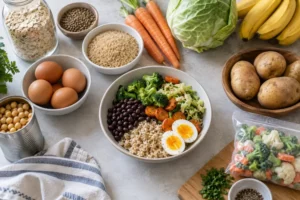
Keep dependable ingredients at home, including eggs, pasta, rice, canned tomatoes, beans, frozen vegetables, onions, garlic, cooking oil, and a few spices. Frozen and canned ingredients are not “cheating.” They reduce preparation time and make regular home cooking more realistic.
When a recipe works, cook extra portions and reuse its components. Tomato sauce, for example, can become pasta, soup, pizza sauce, or a flavorful base for eggs the following day.
Learning how to start cooking is not about memorizing hundreds of recipes. It is about developing dependable habits: choose simple meals, use basic tools, read instructions fully, prepare ingredients in advance, manage heat, and taste as you go.
Food safety should become part of the routine, especially when handling raw meat or storing leftovers. Most importantly, repeat dishes and allow yourself to make mistakes. Every overcooked egg or bland sauce teaches you something useful.
Choose one easy recipe this week and cook it twice. Make one small adjustment on your second attempt, notice the result, and keep building your skills one meal at a time.