Have you ever opened a recipe and felt as though it was written in another language? Instructions such as “sauté until translucent,” “reduce by half,” or “fold gently” may sound obvious to experienced cooks, but they can be confusing when you are just starting out.
Learning a few essential cooking terms makes recipes much easier to follow. Instead of guessing, you understand the heat level, movement, timing, and result the writer expects.
You can also spot mistakes early, such as a sauce boiling when it should simmer or cake batter losing air because it was mixed too aggressively.
This beginner-friendly glossary explains twenty common culinary terms in plain English, with practical examples you can use at home. Keep it nearby, practice one technique at a time, and recipes will soon feel like useful directions rather than mysterious instructions.
Get Organized Before Cooking
1. Mise en Place
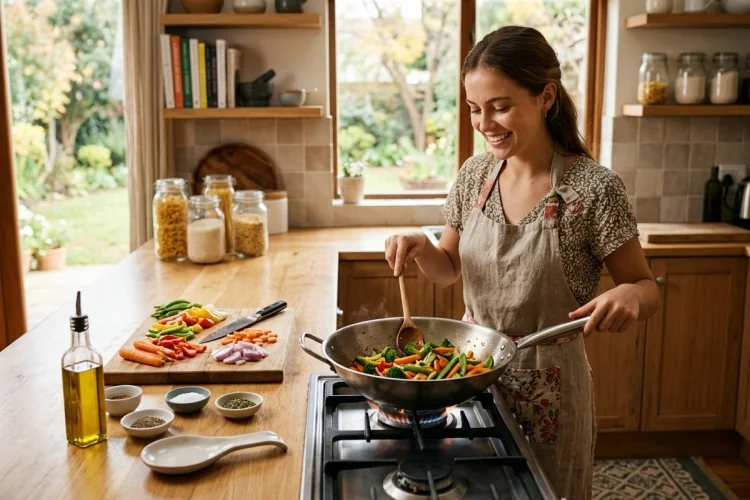
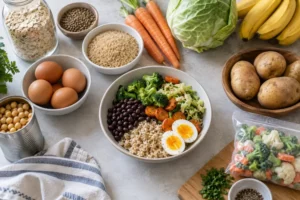
Mise en place means preparing and arranging everything before cooking begins. Read the recipe, chop the ingredients, measure the seasonings, and place the required tools within reach.
This habit matters most in fast dishes. During a stir-fry, proper preparation prevents burned garlic and frantic searches for the sauce. Culinary training treats mise en place as a foundational kitchen skill.
Understand Basic Knife Cuts
2. Chop
To chop means cutting food into pieces without demanding perfectly even shapes. Recipes often ask you to chop herbs, onions, nuts, or cooked meat when exact presentation is not essential.
3. Dice
Dicing creates small, roughly cube-shaped pieces. Similar sizes help carrots, potatoes, and other ingredients cook at approximately the same speed.
4. Mince
Mincing means cutting an ingredient very finely. Garlic, ginger, herbs, and chilies are commonly minced so their flavor spreads throughout a dish.
These three words describe different levels of precision. Chopping is casual, dicing produces more consistent pieces, and mincing creates the smallest cut.
Learn Stovetop Heat Terms
5. Sauté
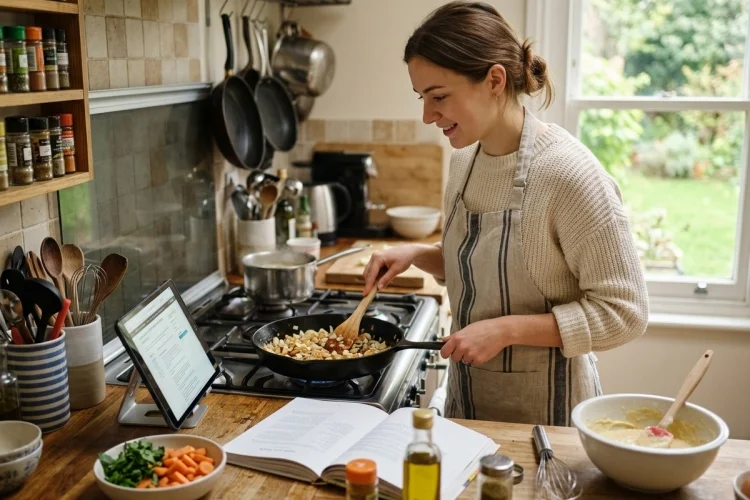
To sauté is to cook small pieces of food fairly quickly in a little fat, usually over medium or medium-high heat. Sautéing onions before adding tomatoes, for example, softens them and builds flavor.
Avoid overcrowding the pan. Too many ingredients trap steam and make browning more difficult.
6. Sear
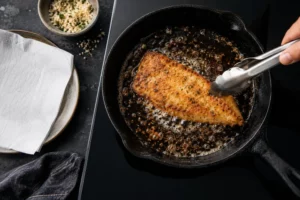
Searing cooks the surface of food over high heat until it develops a brown crust. Pat the ingredient dry, preheat the pan, and avoid moving it immediately.
This method works well for steak, chicken, fish, and mushrooms. Once a crust forms, the food usually releases from the pan more easily.
7. Simmer
A simmer is gentler than a boil. Small bubbles should rise regularly without the liquid moving violently.
Soups, curries, sauces, and stews are often simmered to develop flavor without excessive evaporation.
8. Boil
Boiling means heating liquid until large bubbles rise vigorously throughout the pot. It suits pasta and some vegetables but may be too aggressive for delicate sauces.
When a recipe says “bring to a boil, then reduce to a simmer,” lower the heat once strong bubbling begins. Sautéing and searing are dry-heat techniques, while boiling and simmering use moist heat.
Cook with Water and Steam
9. Blanch
Blanching means briefly cooking food-usually vegetables-in boiling water, then cooling it quickly in ice water. This partially cooks the food while helping it remain crisp and colorful.
For example, blanch green beans for a few minutes, then chill them immediately to stop further cooking.
10. Steam
Steaming cooks food with hot vapor rather than placing it directly in water. Vegetables, fish, dumplings, and buns can sit in a basket above simmering water.
Keep the lid closed because opening it releases heat and lengthens the cooking time. Both blanching and steaming are useful when you want to cook vegetables without relying on a large amount of oil.
Know the Main Oven Methods
11. Bake
Baking surrounds food with dry heat in an oven. The term is commonly used for bread, cakes, cookies, casseroles, and dishes that begin as dough, batter, or a mixture.
Preheat the oven when instructed because many baked foods need the correct temperature from the start.
12. Roast
Roasting also uses dry oven heat, but it usually refers to vegetables, meat, and poultry. The goal is often a browned exterior and a properly cooked center.
Leave space between vegetables on the tray. Crowding traps moisture and makes them steam instead of roast.
13. Broil
Broiling exposes food to intense direct heat from above. It can brown cheese, blister peppers, caramelize toppings, or quickly cook thin ingredients.
Stay close to the oven because food can move from golden to burned within moments. Baking, roasting, and broiling are all dry-heat methods, but they use heat in slightly different ways.
Build Tender Dishes and Better Sauces
14. Braise
Braising combines dry and moist heat. Food is usually browned first, then covered and cooked slowly with a modest amount of liquid.
It is particularly useful for tougher meat, although cabbage, leeks, and other vegetables can also be braised. Unlike boiling, the food is not normally completely submerged.
15. Deglaze
Deglazing means adding liquid to a hot pan and scraping up the browned bits left after searing or sautéing. Stock, water, juice, or wine can transform those bits into the base of a pan sauce.
Those browned pieces are known as fond. Although they may look like something that needs to be scrubbed away, they contain concentrated flavor.
16. Reduce
To reduce means cooking a liquid so water evaporates and its volume decreases. The sauce becomes thicker and its flavor more concentrated.
Taste regularly because saltiness also intensifies. Unlike flour or cornstarch, reduction thickens through evaporation.
17. Emulsify
Emulsifying combines liquids that do not naturally stay mixed, such as oil and vinegar. Whisking creates tiny droplets, while mustard or egg yolk can help stabilize the mixture.
Practice by slowly whisking oil into vinegar and mustard for a basic vinaigrette. Emulsification and reduction are two important techniques for controlling the consistency and flavor of sauces.
Decode Baking and Pasta Instructions
18. Fold
Folding is a gentle mixing technique used to protect air in a light mixture. Cut a spatula through the center, lift from the bottom, and turn the mixture over instead of stirring rapidly.
It is commonly used for whipped egg whites, whipped cream, and delicate cake batter. Stop when the ingredients are just combined.
19. Knead
Kneading means pressing, stretching, and folding dough to build strength and elasticity. Push with the heel of your hand, fold the dough back, rotate it, and repeat.
Slightly sticky dough may become easier to handle as its structure develops, so avoid adding too much flour immediately. Kneading is more vigorous than folding and is commonly performed near the beginning of bread preparation.
20. Al Dente
Al dente means “to the tooth” in Italian. It describes pasta that is cooked but still offers slight resistance when bitten rather than feeling soft or mushy.
Begin tasting shortly before the package’s suggested cooking time ends, especially if the pasta will cook again in hot sauce. There should be a pleasant bite, but not a hard or uncooked center.
Understanding essential cooking terms gives you more than a bigger vocabulary. It helps you manage heat, prepare ingredients evenly, build flavor, and follow recipes without stopping to search for every instruction.
Begin with common words such as chop, sauté, simmer, bake, and reduce. Then practice unfamiliar techniques in easy dishes: blanch green beans, deglaze a chicken pan, emulsify vinaigrette, or fold whipped cream into a dessert.
Save this glossary and choose one new term to practice each week. Before long, you will read recipes more confidently, improve your kitchen instincts, and make better decisions when a dish does not go exactly as planned.